
Why Thin-Section Bearings Are Essential for Compact Robot Joints
As robotics engineers push the boundaries of miniaturization and dexterity, the design of compact robot joints has become a critical challenge. Every millimeter of space and every gram of weight must be optimized without sacrificing precision or durability. In this context, the choice of bearing type can make or break a joint’s performance. Thin-section bearings have emerged as an indispensable component, enabling tight radial and axial space envelopes while delivering the rotational accuracy and load capacity required for high-speed, multi-axis articulation. This article explains why thin-section bearings are essential for modern robot joints, how they compare with conventional bearings, and what engineers should consider when selecting a supplier.
What Are Thin-Section Bearings?
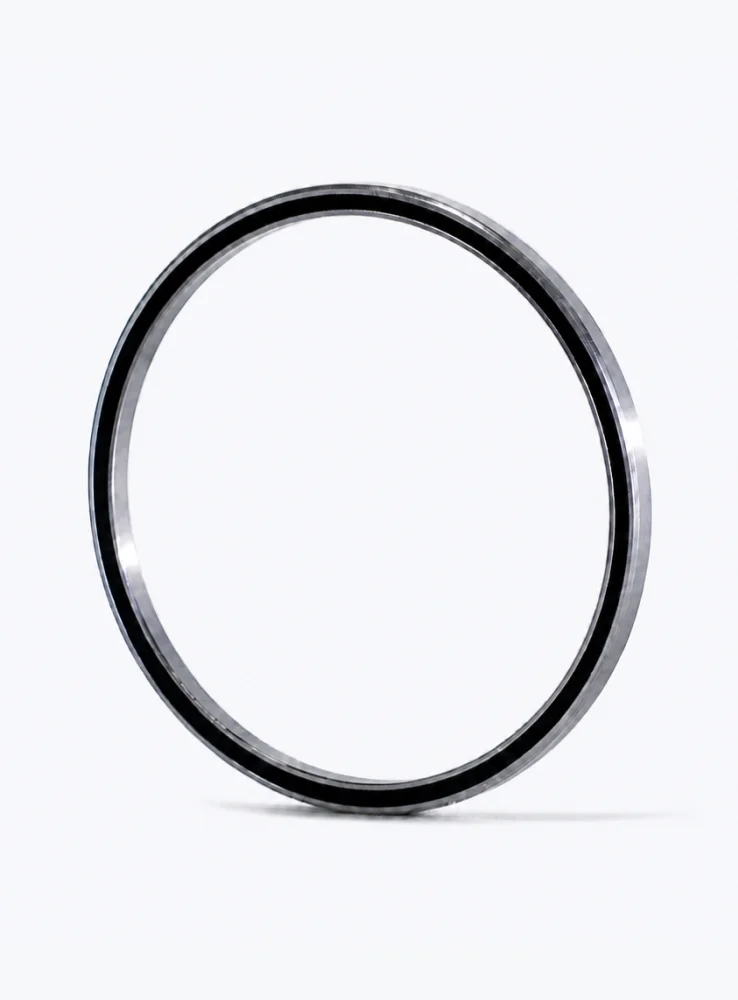
Thin-section bearings are a family of rolling-element bearings characterized by a radially thin cross-section relative to their bore diameter. Unlike standard bearings that maintain a proportional thickness as the bore size grows, thin-section bearings maintain a constant cross-section across a wide range of bore sizes—typically in the range of 3 mm to 4.5 mm for inch-series or 3 mm to 5 mm for metric-series. This unique geometry allows them to fit into confined spaces where a conventional bearing would require more radial room.
Common types include deep-groove ball bearings, angular contact ball bearings, and four-point contact ball bearings, each suited for different load combinations. In robot joints, the four-point contact design is particularly popular because it can handle both radial and axial loads in a single row, simplifying housing and shaft design.
Key Advantages of Thin-Section Bearings in Robot Joints
Space and Weight Savings
The most obvious benefit is the dramatic reduction in radial cross-section. A typical thin-section bearing can save up to 60–80% of radial space compared to a standard bearing of the same bore diameter. This directly contributes to a more compact joint envelope, allowing robots to have smaller housings, lighter arms, and tighter packing of actuators, encoders, and wiring. For collaborative robots (cobots) and surgical robots, where every cubic millimeter counts, this advantage is decisive.
…
For more detailed information on why thin-section bearings are crucial for compact robot joints, please click here: https://www.bobibearing.com/a/bearing-knowledge/thin-section-bearing.html


