
Graphite Crucible for Vacuum Melting: Key Features
In the world of high-temperature metallurgy, vacuum melting presents unique challenges that demand specialized tooling. Among these, the graphite crucible stands as a critical component, directly influencing melt quality, process efficiency, and operational safety. Engineers and procurement specialists seeking a graphite crucible for vacuum melting must evaluate purity, thermal stability, mechanical strength, and service life. This article examines the key features that define a reliable crucible for vacuum environments, with a focus on how Cangzhou Carbon delivers solutions tailored to these stringent requirements.
The Role of the Graphite Crucible in Vacuum Melting
Vacuum melting is used for producing high-purity alloys, superalloys, and reactive metals such as titanium and zirconium. The crucible must withstand extreme temperatures (up to 2000°C or higher), rapid thermal cycling, and aggressive chemical interactions with molten metals. Unlike conventional melting in air, vacuum conditions eliminate oxidation but introduce risks of outgassing, contamination from crucible materials, and structural failure. Therefore, a graphite crucible for vacuum melting must possess specific properties that go beyond those of standard graphite crucibles.
High Density and Low Porosity
A crucible used in vacuum must have minimal open porosity. Open pores can trap gases and moisture, which are released under vacuum and high temperature, causing contamination or bubbling in the melt. High-density graphite (typically >1.85 g/cm³) reduces gas permeability and improves mechanical strength. Cangzhou Carbon manufactures crucibles using isostatic pressing and fine-grain graphite to achieve density above 1.90 g/cm³, ensuring excellent vacuum-tightness.
Exceptional Thermal Shock Resistance
Vacuum melting often involves rapid heating and cooling cycles. The crucible must resist cracking caused by thermal gradients. Fine-grain graphite with optimized binder systems provides higher thermal conductivity and lower coefficient of thermal expansion, enabling the crucible to endure repeated quenching. Our crucibles are engineered with a thermal shock resistance index that exceeds industry norms, reducing downtime and replacement costs.
High Purity to Prevent Melt Contamination
Any impurities in the crucible—such as sulfur, boron, or metallic elements—can leach into the molten metal and alter its properties. For vacuum melting, crucibles require ultra-high purity (ash content <50 ppm, often <20 ppm). Cangzhou Carbon utilizes high-purity raw materials and a dedicated purification process (graphitization at >2400°C) to minimize ash and volatile residues. This ensures that the crucible does not become a source of contamination even in sensitive applications like semiconductor grade silicon or superalloys.
Mechanical and Chemical Stability Under Vacuum
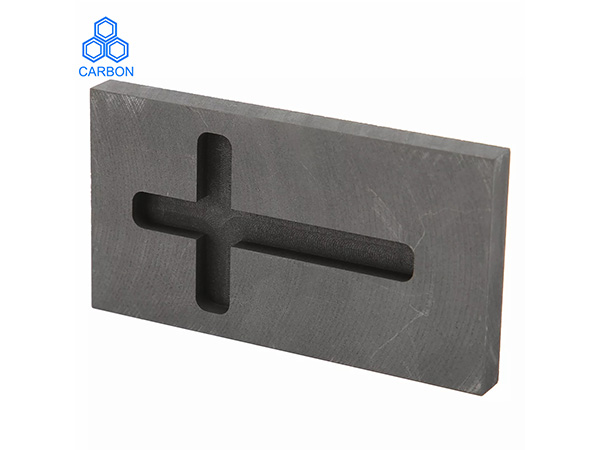
During vacuum melting, the crucible experiences not only thermal stress but also chemical attack from molten metals and slags. The graphite material must resist erosion and wetting by aggressive melts. Key features include:
- Low wettability: High-precision surface finishing reduces metal penetration and sticking.
- Excellent corrosion resistance: The carbon lattice resists attack from many molten metals (e.g., copper, aluminum, nickel alloys) when properly graphitized.
- High compressive strength: At elevated temperatures, graphite actually increases in strength (up to 2500°C). Crucibles must maintain structural integrity during handling and thermal cycling.
Our crucibles are designed with a uniform fine-grain microstructure that minimizes anisotropic effects, providing consistent mechanical performance in all directions.
…
For more details on the key features of graphite crucibles for vacuum melting, please click here: https://www.czgraphite.com/a/news/crucible-vacuum-features.html


