
Cutting Tempered Glass: Myths vs Machine Reality
For decades, a single question has haunted glass fabricators, contractors, and DIY enthusiasts alike: Can tempered glass be cut? The answer, as with most things in materials engineering, is not a simple yes or no. Scattered across the internet are cautionary tales of exploding sheets, but also claims of miracle tools that can “score and snap” tempered glass with ease. The reality is far more structured. In this article, we separate what is myth from what modern machinery can genuinely achieve, and how companies like DISAI are redefining the limits of glass processing.
The Myth: Tempered Glass Can Be Scored and Snapped Like Standard Glass
One of the most persistent misconceptions is that tempered glass behaves like annealed glass when scored with a carbide cutter. The logic sounds reasonable: both are glass, both can be scratched, so why shouldn’t both break along a score line?
In practice, attempting to score and snap fully tempered glass results in near-instant fragmentation. The entire sheet bursts into the small, pebble-like pieces that tempering is designed to produce on impact. The reason lies in the very process that gives tempered glass its strength — a point we will examine in the next section.
The Physics Behind the Shatter: Internal Stress Is the Enemy of Cutting
Tempered glass is created by heating annealed glass to approximately 620°C, then rapidly cooling its surfaces with high-pressure air jets. This controlled thermal shock creates a state of differential stress: the exterior surfaces are in deep compression, while the interior core remains in tension. This stress balance is precisely what makes tempered glass approximately four to five times stronger than annealed glass of the same thickness.
However, this same stress balance is what makes post-tempering cutting impossible. When a cutting wheel penetrates the compressed surface layer, it creates a crack that immediately propagates through the tension zone. The stored energy releases explosively, and the glass shatters. It is not a matter of technique, tool quality, or operator skill — it is fundamental physics. No handheld tool, no amount of “specialized scoring,” can overcome this limitation.
Machine Reality: What Modern Technology Can Actually Achieve
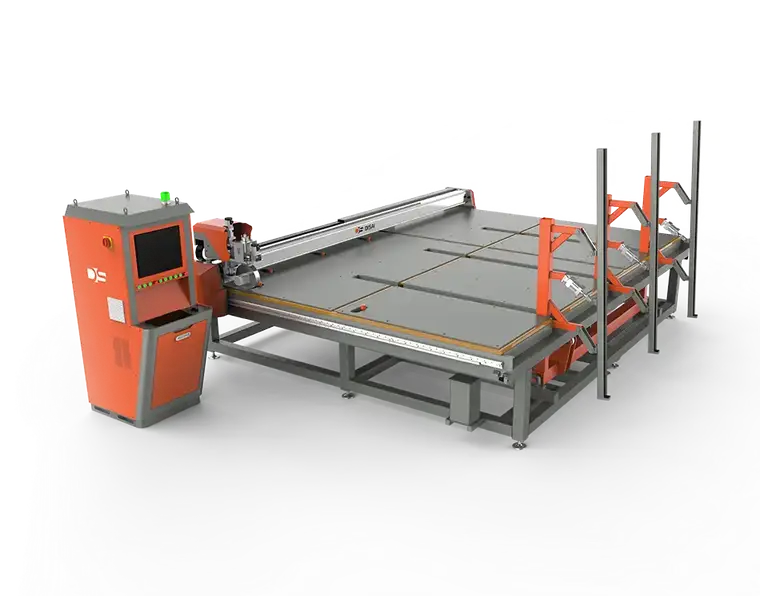
If traditional cutting is physically impossible, what do we mean by “machine reality”? In professional glass processing, the answer is twofold: specialized high-pressure waterjet systems that sometimes work on tempered glass, and — far more commonly — CNC glass cutting systems that process glass before it enters the tempering furnace. Both approaches deserve careful examination.
…
For more detailed information on cutting tempered glass—including common misconceptions and the realities regarding machinery—please click here: https://www.disaiglass.com/industry-news/cutting-tempered/


