
Magnetic vs Bolted Steel Factories: Which Lasts Longer?
When planning a steel factory, the choice between magnetic and bolted connections directly impacts structural longevity, maintenance costs, and operational reliability. While both systems are widely used in industrial construction, their performance over decades differs significantly due to material behavior, load distribution, and environmental exposure. This article provides an engineering-based comparison to help you decide which connection type offers superior durability for your facility.
Understanding the Core Differences Between Magnetic and Bolted Steel Connections
How Magnetic Connections Work
Magnetic steel factories rely on integrated magnetic clamps or plates to join structural members. These systems use high-strength permanent magnets or electromagnets to hold beams and columns in place without mechanical fasteners. The magnetic force distributes stress uniformly across the contact surface, theoretically reducing localized stress concentrations that can lead to fatigue failure. However, magnetic connections are sensitive to temperature fluctuations and vibration, which can gradually weaken the magnetic field over time.
How Bolted Connections Work
Bolted connections use high-strength steel bolts, nuts, and washers to mechanically fasten structural elements. The load is transferred through shear and tension forces in the bolts, requiring precise pre-tensioning to ensure joint integrity. Bolted joints are inherently resistant to gradual degradation from thermal cycling because the mechanical interlock does not rely on external fields. Properly installed bolted connections can last 50+ years with minimal maintenance, provided corrosion protection is maintained.
Comparative Analysis of Longevity Factors
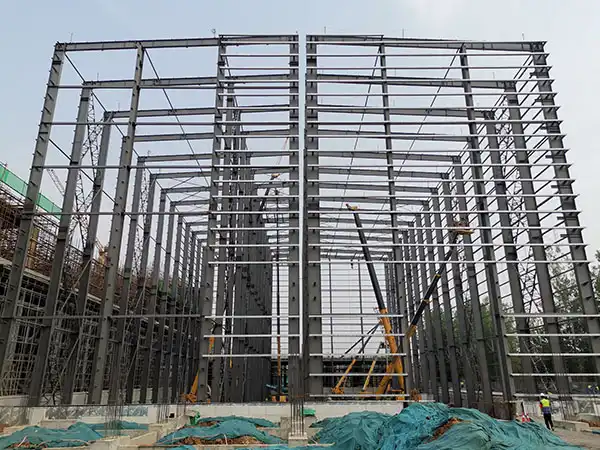
The following factors determine how long each connection type will perform reliably in a steel factory environment:
- Fatigue Resistance: Magnetic connections excel in low-cycle fatigue scenarios because the magnetic field distributes loads evenly. Bolted connections are superior for high-cycle fatigue (e.g., machinery vibration), as bolt preload remains stable under millions of cycles.
- Corrosion Susceptibility: Bolted joints create crevices where moisture and chlorides can accumulate, leading to galvanic corrosion if dissimilar metals contact. Magnetic connections, often sealed with polymer coatings, offer fewer corrosion paths but the magnet itself may demagnetize if exposed to heat above 80°C (176°F).
- Temperature Effects: Magnetic flux density drops by approximately 0.1% per °C rise. In factories with high thermal loads (e.g., steel smelting), bolted connections maintain full strength while magnetic connections may lose 10–20% holding force at 200°C.
- Maintenance Requirements: Bolted connections require periodic retorquing (every 5–10 years) and inspection for loose bolts. Magnetic connections need magnetic field strength testing and recharging or replacement of magnets every 15–20 years.
…
For more details on magnetic-connection steel structure plants versus bolted-connection steel structure plants—and to find out which is more durable—please click here: https://www.hcggsteel.com/a/news/magnetic-vs-bolted-steel-factories.html


