
Muffle Furnace vs Tube Furnace: Key Differences
Choosing between a muffle furnace and a tube furnace is one of the first decisions any laboratory faces when planning high-temperature work. Both are resistance-heated furnaces capable of reaching 1000 °C or more, and both appear in the same applications: heat treatment, ashing, sintering, calcination, and materials research. The confusion arises because the two designs look similar on a specification sheet yet behave very differently once a sample is inside. A muffle furnace offers a large, open chamber for batch processing, while a tube furnace confines the sample inside a controlled-atmosphere tube. Understanding where those differences genuinely matter — atmosphere, temperature uniformity, sample size, and contamination risk — determines whether an experiment produces usable data. This guide compares the two designs point by point, drawing on the furnace engineering experience of Heatest Instrument.
How the Two Furnaces Are Built
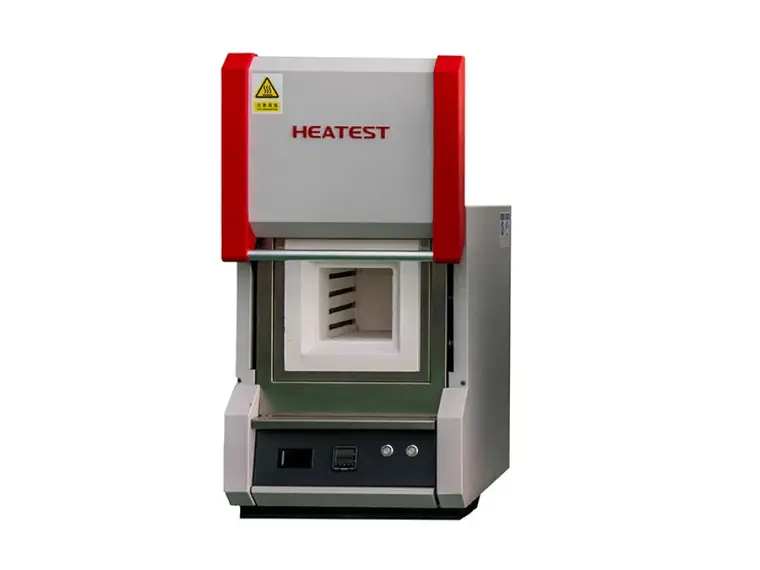
Muffle Furnace Construction
A muffle furnace uses an insulated chamber lined with ceramic fiber or refractory brick, wrapped with resistive heating elements on all sides. The “muffle” refers to the inner chamber that separates the sample from the heating elements, so the sample sees radiant heat rather than direct contact with a hot wire. That separation is the defining feature of the design.
Typical specifications include:
- Standard models reaching 1000 °C to 1200 °C; high-temperature versions using silicon carbide or molybdenum disilicide elements reach 1600 °C to 1800 °C.
- Chamber volumes from a few liters in benchtop units to hundreds of liters in industrial box furnaces.
- Doors that open from the front or top, allowing fast loading of trays, crucibles, and multiple samples at once.
- Kanthal-type (FeCrAl) wire elements for the lower range, ceramic elements for the upper range.
Tube Furnace Construction
A tube furnace wraps its heating elements around a cylindrical tube — typically quartz, alumina, or an alloy such as Inconel. The sample sits inside the tube, and gas flows through it or the tube is evacuated. This geometry is what enables atmosphere control.
…
For more detailed information on the key differences between muffle furnaces and tube furnaces, please click here: https://www.lyheatest.com/electric-furnace-knowledge/muffle-furnace-vs-tube-furnace/


