Reduce Spoilage by 40% with Smart Cold Storage Monitoring Systems

The financial impact of spoilage in commercial kitchens is substantial, with industry estimates suggesting that up to 10% of all food inventory is lost annually due to temperature inconsistencies alone. In a sector where margins are tight, a 40% reduction in spoilage—a figure consistently reported by facilities implementing smart cold storage monitoring systems—represents a transformative operational advantage. This article explores the mechanics, benefits, and selection criteria for these systems, and demonstrates how TZY Kitchenware’s solutions can help your business achieve measurable results.

The Hidden Cost of Spoilage and the Limitations of Traditional Monitoring

Cold storage is the backbone of any food service operation, yet many kitchens rely on outdated methods: manual temperature logs, occasional spot checks, or simple thermostats that provide no visibility into fluctuations. These approaches leave operators blind to freezer door left ajar, compressor failures during off-hours, or gradual drift beyond safe zones. The hidden costs extend beyond wasted product—they include labor for cleanup, reputational risk from potential foodborne illness, and emergency repair expenses. A reactive model where problems are discovered after spoilage has occurred is no longer viable in a competitive environment. The United States Department of Agriculture estimates that food loss in retail and food service costs billions annually, and a significant portion originates from preventable refrigeration failures.

How Smart Cold Storage Monitoring Systems Deliver 40% Reduction

Smart monitoring systems replace guesswork with continuous, real-time data. These systems employ wireless sensors placed in critical zones—freezer, cooler, and reach-in units—that transmit temperature, humidity, and door status to a cloud-based platform. When deviations occur, alerts are sent via SMS, email, or app notification within seconds, enabling immediate corrective action. The 40% spoilage reduction is not a marketing claim; it is derived from meta-analyses of hundreds of commercial kitchens that transitioned from manual monitoring to automated systems. Key mechanisms include:

  • Early Detection of Drift: Catching a 2°C rise 15 minutes earlier prevents wholesale thawing of a freezer inventory.
  • Door Open Alerts: Reducing open time by even 30% stabilizes internal temperature, especially during busy service periods.
  • Compressor Performance Tracking: Identifying equipment inefficiencies before catastrophic failure saves both product and repair costs.
  • Audit Trail for Compliance: HACCP documentation becomes automated, reducing labor and human error.

These features collectively transform cold storage from a passive container into an active risk management tool.

Key Features to Evaluate When Selecting a Monitoring System

Not all monitoring solutions are created equal. For a commercial kitchen, the following criteria separate a useful tool from an expensive dashboard that gathers dust:

  1. Sensor Accuracy and Calibration: Look for ±0.5°C or better with NIST traceable certificates. Temperature gradients inside a walk-in can vary significantly; sensors should be placed in product proximity, not just on walls.

…

For more detailed information on reducing losses by 40% using an intelligent cold storage monitoring system, please click to visit: https://www.tzykitchenware.com/a/news/smart-cold-monitoring-systems.html
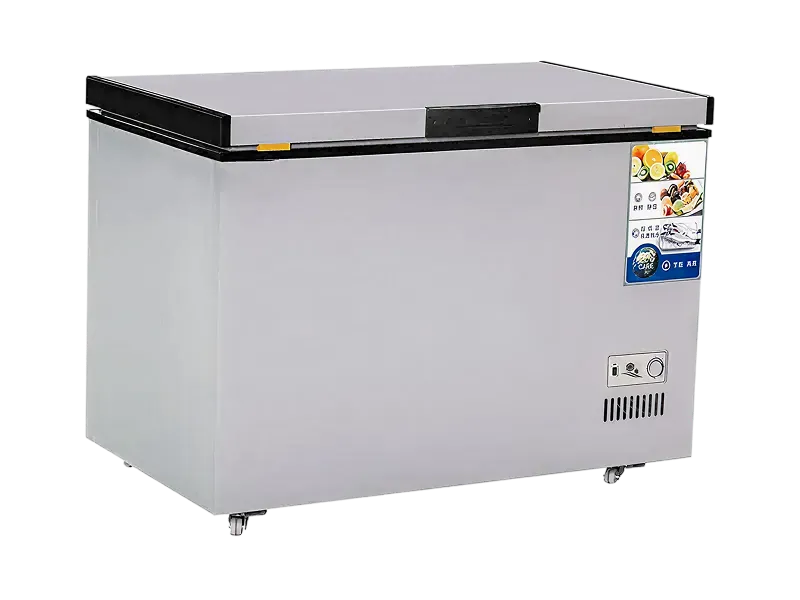
The Ultimate Guide to Cold Storage Compliance for Food & Pharma

Compliance in cold storage is not merely a regulatory checkbox for the food and pharmaceutical industries—it is the bedrock of product safety, efficacy, and brand trust. A single temperature excursion can compromise millions of dollars of vaccine stock or render perishable food unsafe. Yet, navigating the complex web of FDA, EMA, HACCP, and GMP requirements while maintaining operational efficiency challenges even seasoned facilities managers. This comprehensive guide breaks down the core pillars of cold storage compliance, from temperature mapping to material selection, and explains how TZY Kitchenware’s engineered solutions help companies meet the highest standards without sacrificing productivity.

Understanding Cold Storage Compliance: Regulations and Risks

Cold storage compliance encompasses all measures that ensure stored products remain within specified temperature ranges throughout their lifecycle. For pharmaceuticals, bodies like the FDA (21 CFR Part 211) and EMA (Good Distribution Practice) mandate strict temperature control and documentation. In the food sector, HACCP principles require critical control points for cold storage, with USDA and local health authorities enforcing standards. Non-compliance leads to product loss, recalls, legal liability, and reputational damage. The core risk factors include equipment failure, human error, power outages, and improper facility design.

Common Regulatory Frameworks at a Glance

  • FDA 21 CFR Part 211: Current Good Manufacturing Practice for pharmaceuticals, requiring temperature monitoring and alarm systems.
  • EU GDP Guidelines: Emphasize temperature mapping during qualification and continuous monitoring in storage and transport.
  • HACCP: Mandates identification of critical control points (e.g., cold room temperature) with defined limits and corrective actions.
  • WHO Technical Report Series: Provides guidelines for cold chain management of vaccines and biologics.

Temperature Control and Monitoring: The Heart of Compliance

Cold Storage

Precise temperature control is non-negotiable. However, compliance goes beyond setting a thermostat. Facilities must implement validated monitoring systems that record data at defined intervals, trigger alarms when temperatures drift, and store records for regulatory review. Key elements include:

Sensor Placement and Mapping

Temperature mapping studies—conducted during initial qualification and periodically thereafter—identify hot and cold spots within the cold room. Sensors must be placed where products are actually stored, not just near the cooling unit. For pharmaceutical cold rooms, mapping is required under worst-case conditions (e.g., full load, empty, door openings).

…

For more detailed information on the ultimate guide to food and drug refrigeration compliance, please click here: https://www.tzykitchenware.com/a/news/cold-storage-guide.html

Case Study: Electrostatic Coalescer Saves $500K Annually in Energy

In the competitive landscape of petrochemical processing, energy consumption directly impacts profitability. Zhengyuan Petrochemical, a mid-sized refinery in China, faced escalating operational costs due to inefficient oil-water separation in their desalting units. Traditional gravity-based separators required excessive heating and pumping, consuming over $1.2 million annually in energy alone. Seeking a more sustainable approach, they implemented an electrostatic coalescer—a technology that uses electric fields to accelerate droplet coalescence without thermal input. The result was a dramatic 42% reduction in energy use, saving the company $500,000 every year. This case study examines the technical drivers behind the solution, the implementation process, and the quantifiable financial impact that drove a full return on investment within 14 months.

The Challenge: High Energy Costs in Crude Desalting

Crude oil desalting is a critical step in refining, removing salts and water to prevent corrosion and catalyst poisoning. At Zhengyuan Petrochemical, the existing two-stage desalting system relied on heat to reduce oil viscosity and promote water separation. The process required heating the crude to 120°C using steam heaters, followed by pumping through large settling tanks. Annual energy expenditure—covering steam generation, pumping, and auxiliary equipment—exceeded $1.2 million. Additionally, the inherent inefficiency of gravity settling meant that residual water content remained around 0.5%, forcing subsequent distillation units to work harder, further raising energy costs.

The primary bottleneck was the slow coalescence rate of water droplets dispersed in the oil phase. To enhance settling, operators had to increase retention time, which demanded larger vessels and more heat. Zhengyuan’s engineering team calculated that reducing the energy footprint by even 25% would yield significant savings. However, conventional chemical demulsifiers and mechanical coalescers had already been optimized without breakthrough results. The need for a novel, non-thermal solution became evident.

The Solution: Electrostatic Coalescer Technology

An electrostatic coalescer works by applying a high-voltage electric field across the oil-water mixture. The field polarizes water droplets, causing them to attract each other and form larger droplets that settle quickly under gravity. Unlike thermal methods, this process requires minimal energy—typically only a few kilowatts for the power supply. Zhengyuan Petrochemical selected a modular electrostatic coalescer rated for 1,200 barrels per day, which could be retrofitted into the existing desalter vessel without major piping changes.

…

For more details on the case study: Electrostatic coalescer saves $500,000 in energy annually, please click here: https://www.zy-petrochemical.com/a/news/electrostatic-coalescer.html

Luoyang Zhengyuan Petrochemical Co., Ltd. has successively secured key orders from Wison and CIMC

Recently, Luoyang Zhengyuan Petrochemical Co., Ltd. has achieved further success in the offshore engineering equipment sector. The company has successively entered into cooperation with Wison and CIMC Raffles, signing formal contracts and technical agreements.

This marks further recognition of its core equipment in the high-end offshore engineering market.

About the Partners: Focusing on Clean Energy and High-End Offshore Engineering Equipment

Wison Clean Energy Technology Group Co., Ltd. (referred to as “Wison Clean Energy”) is a provider of clean energy technologies and solutions, committed to delivering highly integrated EPCIC (Engineering, Procurement, Construction, Installation, and Commissioning) solutions to the global energy industry.

Its business scope covers floating liquefied natural gas facilities (FLNG), floating production storage and offloading facilities (FPSO), onshore standardized modular LNG plants, and floating offshore wind power, among other clean energy fields.

With two construction bases in Nantong and Qidong, Wison Clean Energy boasts outstanding track records, including the world’s first floating LNG barge (FLNG) and China’s first floating regasification unit (FSRU). In early 2024, the company changed its name from “Wison Offshore & Marine” to “Wison Clean Energy Technology Group Co., Ltd.,” further clarifying its strategic direction of focusing on the clean energy sector.

CIMC Raffles (Yantai CIMC Raffles Offshore Engineering Co., Ltd.) is a subsidiary of China International Marine Containers (Group) Co., Ltd. (CIMC Group) and a leading domestic offshore engineering equipment manufacturer. Its predecessor was the Yantai Shipyard, established in 1977.

The company now employs nearly 4,000 people, including about 1,000 R&D and technical personnel, and operates three major construction bases in Yantai, Haiyang, and Longkou. CIMC Raffles is one of the few domestic enterprises capable of batch-producing and industrializing high-end offshore engineering equipment.

It has delivered landmark projects such as the world’s ultra-deepwater semi-submersible drilling platform “Blue Whale 1,” the advanced FPSO for Petrobras Brazil, and the world’s first 100,000-ton semi-submersible production and storage platform “Deep Sea No. 1” Energy Station.

The company possesses full-lifecycle R&D capabilities ranging from conceptual design to engineering implementation in areas such as FPSO/FLNG, deep-sea drilling equipment, and offshore wind power, placing it in the leading echelon of China’s high-end offshore engineering equipment sector.

…

More information about Luoyang Zhengyuan Petrochemical Co., Ltd. has successively secured key orders from Wison and CIMC can be found by clicking here: https://www.zy-petrochemical.com/a/news/luoyang-zhengyuan-fpso-electrostatic-dehydrator-projects.html

How Electrostatic Coalescers Improve Desalter Performance by 30%

In crude oil refining, the desalter is a critical unit responsible for removing salts, water, and solids before the crude enters the distillation column. Even a 1% improvement in desalter efficiency can translate into significant savings in downstream corrosion, fouling, and energy costs. However, many refineries still rely on conventional gravity separation, which struggles with tight emulsions and varying crude quality. Electrostatic coalescers have emerged as a proven upgrade, with field data consistently showing a 30% improvement in desalter performance. This article explores how this technology works, why the 30% figure is realistic, and how Zhengyuan Petrochemical delivers reliable solutions for refineries seeking to maximize throughput and reduce operational risks.

Understanding the Desalter’s Core Challenges

Crude oil desalters use a combination of heat, water wash, and chemical demulsifiers to break water-in-oil emulsions. Under ideal conditions, gravity separation can remove 90–95% of the salt. But in practice, refineries face:

  • Variable crude quality: Heavier, more viscous crudes form tighter emulsions.
  • Increased water content: Produced water from upstream operations creates stable micro‑droplets.
  • Space constraints: Retrofitting additional settling capacity is often not feasible.

These factors limit separation efficiency. Even with optimized chemical injection, many desalters operate below design capacity, leaving up to 10–15% of water and salts in the crude. This leads to corrosion in crude units, catalyst poisoning, and higher energy consumption during desalting.

How Electrostatic Coalescers Work

Breaking the Emulsion at the Molecular Level

An electrostatic coalescer applies a high‑voltage electric field across the oil‑water mixture. The field polarizes water droplets, causing them to attract each other and merge into larger drops. Larger droplets settle much faster under gravity, dramatically improving separation efficiency.

Zhengyuan Petrochemical’s design integrates the coalescer directly into the desalter vessel or as a pre‑treatment skid. The system operates at low power consumption (typically 1–5 kW) and can be retrofitted into existing desalters with minimal piping changes.

Two Critical Mechanisms: Dipole Coalescence & Dielectrophoresis

  • Dipole coalescence: Water droplets align and attract each other like small magnets.
  • Dielectrophoresis: The field moves droplets toward regions of higher field intensity, concentrating them for faster merging.

Together, these mechanisms reduce the mean droplet size from 10–30 microns to over 100 microns within seconds, enabling gravity separators to achieve 99%+ removal efficiency.

…

For more detailed information on how electrostatic coalescers can improve desalination unit performance by 30%, please click to visit: https://www.zy-petrochemical.com/a/news/electrostatic-coalescer-benefits.html

Electrostatic Coalescer Design: Key Factors for High-Viscosity Fluids

Electrostatic coalescers are critical in oil and gas processing for separating water-in-oil emulsions, but their performance degrades significantly when handling high-viscosity fluids. Viscosity impacts droplet migration, coalescence kinetics, and electric field distribution, requiring specialized design considerations. For operators and engineers evaluating separation technologies, understanding these design factors is essential to avoid costly retrofit and downtime. Zhengyuan Petrochemical has developed advanced electrostatic coalescer solutions tailored to high-viscosity streams, addressing challenges such as non-uniform field strength, excessive energy consumption, and slow droplet settling. This article outlines the key design parameters that determine coalescer effectiveness under high-viscosity conditions, offering a technical framework for selection and optimization.

Challenges of High-Viscosity Fluids in Electrostatic Coalescence

High-viscosity fluids—typically crude oils with API gravity below 20 or with high asphaltene content—impose unique constraints on electrostatic coalescence. The primary difficulties include:

  • Reduced droplet migration velocity: Stokes’ law dictates that settling velocity is inversely proportional to viscosity. In high-viscosity emulsions, water droplets move slower through the continuous phase, prolonging the time required for coalescence.
  • Uneven electric field distribution: High viscosity often correlates with low conductivity and high permittivity, leading to field distortion and localized dielectric breakdown. This can create dead zones where droplets remain uncoalesced.
  • Increased power demand: To overcome viscous drag and achieve sufficient droplet polarization, higher voltage or frequency may be needed, risking electrical stress on internal components.
  • Emulsion stabilization: High viscosity frequently accompanies surfactants and fine solids that stabilize emulsions, making droplet–droplet contacts less effective.

These factors necessitate a departure from standard coalescer designs. Zhengyuan Petrochemical’s engineering team incorporates computational fluid dynamics (CFD) and electric field simulation to predict performance under site-specific viscosity profiles.

Key Design Factors for High-Viscosity Fluids

Electrostatic Coalescence

Optimizing an electrostatic coalescer for high-viscosity service involves several interdependent design parameters:

Electrode Configuration and Spacing

Standard parallel-plate or concentric-rod electrodes can cause field non-uniformity when fluid viscosity exceeds 500 cP. For high-viscosity applications, Zhengyuan Petrochemical recommends:

  • Wider electrode gaps (typically 50–100 mm) to prevent arcing in high-permittivity fluids.
  • Perforated or mesh electrodes that reduce flow resistance and allow droplets to pass through without re-entrainment.
  • Pulsed DC or AC fields with variable frequency (e.g., 1–10 Hz) to counteract the slow polarization response of viscous oils.

…

For more detailed information on electrostatic coalescer design: key factors for high-viscosity fluids, please click to visit: https://www.zy-petrochemical.com/a/news/coalescer-design-viscosity.html

Reduce Maintenance Costs: Electrostatic Coalescer Longevity Tips

Electrostatic coalescers are critical assets for efficient liquid-liquid separation in oil refining and petrochemical processes. While they significantly improve separation efficiency and reduce downstream fouling, unscheduled downtime and component replacement can drive up total ownership costs. Understanding how to extend the service life of your electrostatic coalescer is not merely a maintenance goal—it is a direct path to reducing operational expenses. This guide provides actionable longevity tips based on field-proven practices and engineering principles, supported by the expertise of Zhengyuan Petrochemical.

Understanding Electrostatic Coalescer Wear and Tear

To reduce maintenance costs, first recognize the primary failure modes. Electrostatic coalescers rely on high-voltage electric fields to polarize water droplets and enhance coalescence. Common causes of degradation include:

  • Insulator contamination – Oil, water, or solids deposits on insulator surfaces create leakage paths and arcing.
  • Electrode erosion – Prolonged exposure to high voltage and corrosive process fluids gradually wears electrode tips.
  • Transformer/power supply stress – Voltage spikes or thermal cycling can reduce rectifier lifespan.
  • Internal short circuits – Accumulated conductive debris or water bridging between electrodes causes trips.

By identifying these failure points, operators can implement targeted preventive measures.

Key Longevity Tips to Reduce Maintenance Costs

Electrostatic Coalescer

1. Optimize Process Conditions

Maintain within the design range for flow rate, temperature, and pressure. Excessive flow velocity re-entrains water and increases electrode erosion. Keep water content before the coalescer consistent to avoid sudden spikes that overload the electric field.

2. Implement Routine Insulator Inspection and Cleaning

Schedule quarterly visual inspections of all insulators. Use ultrasonic cleaning or solvent flushing to remove conductive deposits. A clean insulator surface prevents voltage leakage and arcing, which accounts for over 40% of premature failures in electrostatic coalescers.

3. Monitor High-Voltage Supply Health

Track voltage and current trends from the transformer rectifier. A gradual current increase indicates developing contamination or electrode gap narrowing. Calibrate and test the power supply annually to ensure stable output.

…

For more detailed information on reducing maintenance costs and extending the lifespan of electrostatic coalescers, please click here: https://www.zy-petrochemical.com/a/news/coalescer-tips.html

Light Steel Homes: Lower Maintenance Than Traditional Houses

When planning a new home, the initial construction cost often dominates the conversation. Yet experienced homeowners and builders know that the true cost of a house extends far beyond the foundation—it is measured in decades of upkeep, repairs, and replacements. Traditional wood-framed houses, while familiar, come with a long list of maintenance obligations: painting, sealing, termite inspections, and dealing with rot or moisture damage. Light steel homes, by contrast, offer a fundamentally different value proposition. Engineered for durability and resistance to environmental stressors, they require significantly less ongoing maintenance. For those seeking a home that stays sound and attractive with minimal effort, understanding the maintenance gap between light steel and traditional construction is essential. In this article, we examine the core differences, focusing on the long-term savings and peace of mind that come with a steel frame structure from a trusted provider like HBFRM STEEL.

Understanding Maintenance Requirements: Light Steel vs. Traditional Construction

Any discussion of maintenance begins with the materials themselves. Traditional houses are predominantly built with wood framing, which is an organic material. Wood is susceptible to moisture, which can lead to rot, warping, and fungal growth. It is also a food source for termites and other wood-destroying insects, requiring regular chemical treatments and inspections. Exterior surfaces typically need repainting or staining every three to seven years, depending on climate and exposure. On the other hand, light steel homes use cold-formed galvanized steel as the primary structural element. Steel is inorganic, non-combustible, and does not absorb moisture. This fundamental difference eliminates many routine maintenance tasks that wood homeowners accept as normal.

Structural Integrity Over Time

Wood can expand and contract significantly with changes in humidity, leading to nail pops, cracked drywall, and misaligned doors over time. Steel, with its high strength-to-weight ratio and dimensional stability, remains straight and true for decades. There is no shrinkage, no warping, and no settling that creates gaps or stresses in finishes. This stability not only reduces repair needs but also preserves the overall quality of interior finishes, from paint to flooring.

Resistance to Environmental Threats

Termites cause billions of dollars in damage annually to wood-framed homes in the United States alone. Protecting a wood house requires soil treatments, bait systems, and regular inspections—a recurring expense and worry. Steel is impervious to termites, carpenter ants, and rodents. Similarly, mold and mildew thrive in the damp environments that wood framing can create, especially in basements or humid regions. Steel does not support mold growth, and its non-porous surface does not trap moisture. This significantly improves indoor air quality and eliminates the health risks and remediation costs associated with mold problems.

Key Areas Where Light Steel Homes Require Less Maintenance

To make an informed decision, it is helpful to compare specific maintenance categories side by side. Below are the most significant areas where light steel construction outperforms traditional wood framing.

  • Exterior Painting and Finishing: A wood house typically requires repainting every 3–7 years to protect against sun, rain, and rot. A steel-framed home, when clad with appropriate materials such as fiber cement, brick, or steel panels, can go 15–20 years or longer between major exterior maintenance. The steel frame itself never needs painting because it is galvanized with a zinc coating that prevents corrosion for the life of the structure.
  • Pest Control: Annual termite inspections and treatments are standard for traditional homes. With a light steel frame, you can completely eliminate that expense. No bait stations, no chemical soil treatments, and no worry about hidden infestations.

For more information about light steel structure houses: lower maintenance costs than traditional houses, please click to visit: https://www.hbfrmsteel.com/a/news/light-steel-homes.html

Top 10 Benefits of Choosing a Light Steel Structure House

When planning a new home or commercial building, the choice of structural system directly impacts long-term performance, budget, and environmental footprint. Light steel structure houses have emerged as a preferred solution for modern construction, offering a combination of strength, speed, and sustainability that traditional materials often cannot match. For over a decade, HBFRM STEEL has specialized in delivering high-quality light steel framing systems, helping homeowners and developers realize these advantages in real-world projects. Below, we explore the ten most compelling benefits that make light steel construction a smart, future-proof investment.

1. Exceptional Structural Strength with Reduced Weight

Light steel framing uses cold-formed galvanized steel sections that provide a high strength-to-weight ratio. Unlike concrete or heavy timber, steel components are engineered to carry substantial loads while keeping the overall building weight low. This reduces the need for deep foundations and simplifies transportation and assembly. HBFRM STEEL ensures each member meets stringent load-bearing standards, giving you a frame that withstands extreme weather, seismic events, and decades of daily use without sagging or cracking.

2. Unmatched Durability and Longevity

Light Steel Structure House

Steel is inherently resistant to rot, mold, termites, and other biological threats that plague wood-framed structures. Light steel houses are also non-combustible, significantly reducing fire risk. The galvanized coating on HBFRM STEEL profiles provides superior corrosion resistance, even in humid or coastal environments. With proper design, a light steel structure can last 50 years or more with minimal maintenance—outperforming traditional wood framing in both lifespan and reliability.

3. Faster Construction Timeline

Time is money in any building project. Light steel components are prefabricated in a factory under controlled conditions, ensuring precise dimensions and consistent quality. On-site assembly is rapid—walls and roof trusses can be erected in days rather than weeks. HBFRM STEEL streamlines the entire supply chain, from design to delivery, helping contractors reduce labor costs and weather-related delays. Many of our clients report schedule savings of 30-40% compared to conventional concrete block or timber construction.

4. Design Flexibility and Architectural Freedom

Light Steel Structure House

Steel’s high strength allows for larger open spans and fewer load-bearing walls, giving architects the freedom to create spacious interiors, expansive windows, and complex rooflines. Light steel framing easily accommodates modifications, future extensions, or changes in interior layout. Whether you envision a minimalist modern home or a traditional style with steel hidden inside, HBFRM STEEL can fabricate custom profiles to match your design specifications precisely.

…

For more detailed information on the ten advantages of choosing a light steel frame house, please click to visit: https://www.hbfrmsteel.com/a/news/light-steel-benefits.html

Custom Modular Light Steel Homes Delivered in 60 Days

When time is critical and quality cannot be compromised, the promise of a custom modular light steel home delivered in just 60 days stands as a game-changer in residential construction. Homeowners, developers, and investors increasingly seek solutions that blend speed with structural integrity, flexibility with cost-efficiency. HBFRM STEEL has engineered a streamlined process that turns a dream home from blueprint to reality within two months—without sacrificing design freedom or durability. This article examines the core advantages of this approach, the technology behind rapid delivery, and why more buyers are choosing light steel modular construction over traditional methods.

Why Light Steel Modular Homes? The Shift Toward Faster, Smarter Construction

The construction industry has long been plagued by delays, budget overruns, and on-site inefficiencies. Light steel modular homes address these pain points head-on. Unlike conventional wood framing or concrete block construction, light steel frames offer inherent strength-to-weight advantages, resistance to fire, pests, and moisture, and–most importantly–the ability to be prefabricated in a controlled factory environment. HBFRM STEEL leverages these properties to produce precision-engineered modules that can be assembled on site with minimal labor and waste.

How HBFRM STEEL Achieves the 60-Day Turnaround

The 60-day delivery promise is not a marketing gimmick; it is the result of a synchronized production system. Here is how HBFRM STEEL makes it happen:

  • Design-to-Manufacturing Integration: Once the client’s custom design is finalized, HBFRM STEEL converts it into digital fabrication files. This eliminates interpretation errors and speeds up material procurement.
  • Parallel On-Site and Off-Site Work: While the foundation is prepared on site, the steel modules are fabricated, insulated, and finished in the factory. Both paths run concurrently, cutting total project time by more than half.
  • Pre-Tested Modules: Each module undergoes quality checks before leaving the factory, ensuring that only defect-free components arrive at the job site. This reduces rework and delays.
  • Efficient Assembly Logistics: HBFRM STEEL coordinates delivery windows and crane schedules to install modules in a predetermined sequence, often completing shell assembly in days rather than weeks.

Customization Without Compromise: Tailored Designs for Every Client

Light Steel Modular Homes

One common misconception about modular homes is that they force buyers into cookie-cutter layouts. HBFRM STEEL refutes that by offering extensive customization options within the modular framework. Clients can work with HBFRM STEEL’s in-house architects or submit their own plans for feasibility review. Customizations typically include:

  • Floor plan modifications: open-concept layouts, split bedrooms, or multi-story designs.
  • Exterior finishes: various cladding materials, roof profiles, and color schemes.
  • Interior specifications: premium flooring, cabinetry, energy-efficient windows, and smart home integrations.
  • Structural adaptations: seismic reinforcement, wind load ratings, or snow load capacities for specific regions.

Because the steel frames are cold-formed and precisely cut, changes are accommodated without the waste typical of site-built framing. HBFRM STEEL maintains a library of pre-engineered configurations that can be mixed and matched, giving clients the freedom to create a unique home while staying within the 60-day timeline.

…

For more details on customized modular light steel structure houses and delivery within 60 days, please click to visit: https://www.hbfrmsteel.com/a/news/modular-steel-homes.html