
How to Prevent Oxidation and Erosion in Graphite Continuous Casting Molds: Proven Strategies for Long-Term Performance
Graphite continuous casting molds play a decisive role in modern metallurgical production, especially in industries such as steelmaking, aluminum processing, and non-ferrous metal manufacturing. As a critical component directly exposed to molten metal, the mold not only determines the dimensional accuracy of billets and ingots but also significantly affects surface quality, production efficiency, and overall operational costs.
Manufacturers choose graphite materials because of their outstanding thermal conductivity, excellent resistance to thermal shock, and stable performance at elevated temperatures. However, despite these advantages, graphite molds are inherently vulnerable to two major degradation mechanisms: oxidation and erosion. If these issues are not effectively controlled, they can lead to rapid mold wear, inconsistent casting quality, and unplanned downtime.
This article provides a comprehensive and practical guide to understanding the root causes of oxidation and erosion in graphite molds, along with proven strategies that help extend service life and improve casting efficiency.
Why Oxidation and Erosion Are Critical Challenges
In continuous casting environments, graphite molds operate under extremely harsh conditions that involve high temperatures, molten metal flow, and exposure to reactive gases. Oxidation and erosion do not occur independently; in most cases, they interact and accelerate each other, leading to compounded damage.
When oxidation weakens the graphite structure, the material becomes more susceptible to mechanical wear. At the same time, erosion exposes fresh graphite surfaces, making them more vulnerable to further oxidation. This cycle can significantly shorten mold lifespan if not properly managed.
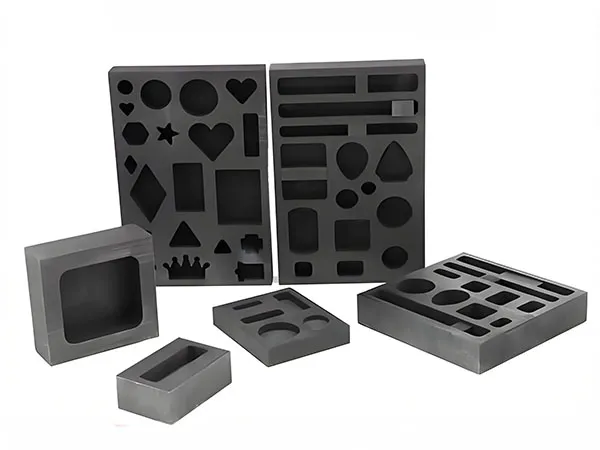
Understanding Oxidation in Graphite Molds
Oxidation is a chemical reaction in which carbon atoms in graphite combine with oxygen at high temperatures, forming carbon monoxide (CO) or carbon dioxide (CO₂). This reaction typically becomes significant when temperatures exceed 400–500°C and accelerates rapidly at casting temperatures.
Key Factors That Promote Oxidation
Several operational and environmental conditions contribute to oxidation:
High casting temperatures increase the reaction rate between graphite and oxygen
Extended exposure time during continuous production cycles
Oxygen-rich environments caused by poor sealing or inadequate gas protection
Airflow and humidity around the casting area, which introduce additional oxygen
As oxidation progresses, the mold surface gradually loses material, resulting in dimensional deviations, rough surfaces, and reduced thermal conductivity. In severe cases, structural integrity may be compromised, leading to premature mold failure.
…
For more detailed information on how to prevent oxidation and corrosion of graphite continuous casting molds, please click to visit: https://www.czgraphite.com/a/news/how-to-prevent-oxidation-of-continuous-casting-graphite-molds.html

