
Optimizing Welding Efficiency with VFD Speed Control for Automatic Welding Rotators
In modern industrial welding operations, precision, efficiency, and safety are essential for achieving high-quality results. One of the key technologies that significantly enhances these aspects is the VFD speed control for automatic welding rotators. Variable Frequency Drive (VFD) systems provide precise speed regulation, enabling operators to maintain consistent weld quality across diverse workpieces and materials. This article explores the advantages, working principles, and practical applications of VFD-controlled welding rotators, offering manufacturers a comprehensive understanding of how to optimize their welding processes.
Understanding Automatic Welding Rotators
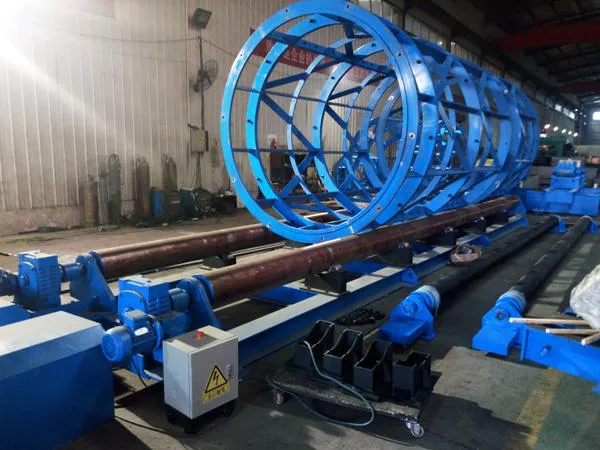
Automatic welding rotators are specialized devices designed to rotate cylindrical workpieces, such as pipes, tanks, and pressure vessels, during welding operations. The primary purpose of these machines is to ensure uniform weld deposition and minimize defects caused by human error or inconsistent motion. Traditionally, welding rotators were operated at fixed speeds or adjusted manually, limiting flexibility and process control. With the integration of VFD technology, these limitations have been overcome, allowing for more precise and adaptive speed management.
The Role of VFD in Welding Rotators
A Variable Frequency Drive (VFD) is an electronic device that controls the speed of an electric motor by adjusting the frequency and voltage supplied to it. When applied to welding rotators, VFDs offer several critical advantages:
Precise Speed Control
Different welding procedures and materials require specific rotational speeds for optimal results. A VFD allows operators to fine-tune the rotation speed, ranging from very slow movements for delicate welding to higher speeds for large-diameter pipes. This precision helps maintain consistent weld bead formation and reduces the risk of defects such as undercutting or uneven penetration.
Energy Efficiency
Unlike traditional motor controllers, which often operate at constant speed and dissipate excess energy, VFDs adjust motor output according to load requirements. This feature reduces energy consumption and lowers operating costs while extending the lifespan of both the motor and the rotator.
…
For more detailed information on optimizing the welding efficiency of automatic welding rotators using frequency converter speed control, please click to visit: https://www.bota-weld.com/en/a/news/vfd-speed-control-for-automatic-welding-rotators.html


