
Slewing Bearing Lubrication Best Practices for Long-Term Reliability
Proper lubrication is the lifeblood of any slewing bearing, directly influencing its operational lifespan, load capacity, and overall reliability. Without a well-planned lubrication strategy, even the highest-quality slewing bearing can suffer from premature wear, increased friction, and eventual failure. This article, informed by decades of industry experience from LYMC, outlines the critical best practices for lubricating slewing bearings to ensure long-term reliability in demanding applications such as construction equipment, wind turbines, and material handling systems.
Understanding Lubrication Fundamentals for Slewing Bearings
Slewing bearings operate under unique conditions, combining both rotational and oscillating movements while supporting large axial and radial loads. The lubricant must not only reduce friction between rolling elements and raceways but also protect against corrosion, dissipate heat, and seal out contaminants. The two primary lubrication methods are grease lubrication and oil lubrication. Grease is the most common choice due to its simplicity, reduced leakage, and ability to act as a seal. Oil lubrication, while offering better cooling and high-speed performance, is typically reserved for specialized high-speed or extreme-temperature environments.
Key Functions of Lubrication
- Friction Reduction: A continuous lubricant film separates rolling elements from raceways, preventing metal-to-metal contact.
- Wear Protection: Additives in the lubricant form a protective layer that minimizes abrasive and adhesive wear.
- Corrosion Prevention: The lubricant barrier excludes moisture and contaminants that cause rust and pitting.
- Heat Dissipation: Lubricant carries away frictional heat, maintaining stable operating temperatures.
- Contaminant Exclusion: Thickened grease helps seal the bearing against dust, dirt, and water ingress.
Selecting the Right Lubricant for Optimal Performance
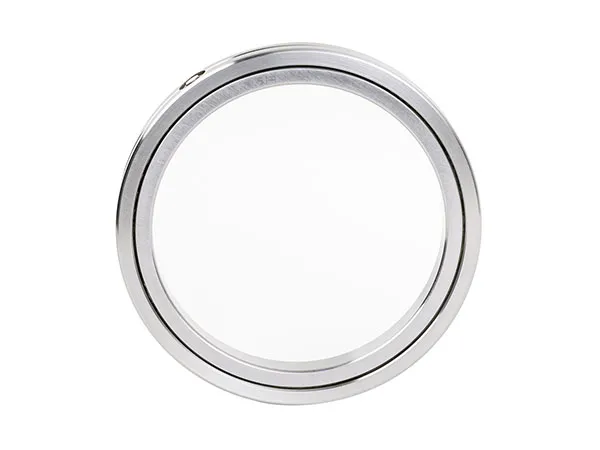
Choosing the correct lubricant is a critical decision that depends on operating conditions, load spectrum, ambient temperature, and rotational speed. LYMC recommends evaluating three key parameters:
Viscosity and Base Oil
The base oil viscosity must be sufficient to maintain an elastohydrodynamic (EHD) film under load. For most slewing bearing applications, an ISO VG 220 to 680 grade grease is typical. Higher loads and slower speeds call for higher viscosity. Synthetic base oils (e.g., PAO, silicone) offer better thermal stability and longer life in extreme temperatures.
Thickener Type
Lithium complex thickeners are widely used due to their good mechanical stability and water resistance. Polyurea greases excel in high-temperature and high-speed applications. Aluminum complex thickeners provide excellent water resistance for outdoor or marine environments.
…
For more detailed information on best practices for the long-term lubrication reliability of slewing bearings, please click here: https://www.mcslewingbearings.com/a/news/slewing-lubrication-guide.html


