
Best Glass Cutting Machines for Home Craftsmen (2025)
Most home workshops treat glass cutting as a rare, stressful task: mark the line, score once, hold your breath, and hope the snap follows the score. It does not have to be that way. In 2025, the market offers home craftsmen an unprecedented range of machines, from refined hand-held scorers to desktop CNC systems that once belonged in industrial fabrication shops. Brands such as DISAI have closed the gap between professional-grade equipment and home workshop budgets, making it easier than ever to cut mirrored panels, stained-glass blanks, and decorative tiles with factory-level precision. This guide examines the most capable glass cutting machines available to home craftsmen this year, explains what distinguishes each type, and outlines practical criteria to help you match a machine to your workspace and project volume.
What Home Craftsmen Need From a Glass Cutting Machine
The first step in choosing a machine is honestly assessing your workflow. A hobbyist who cuts a few 20 cm squares for coasters every month has very different requirements from someone producing custom cabinet doors or leaded-glass windows on a weekly basis. Cutting capacity, repeatability, and the ability to handle different glass weights should guide the decision long before aesthetics or brand loyalty come into play.
Manual Cutters: Precision at Your Fingertips
Traditional hand-held cutters remain indispensable for quick, freehand cuts and curved shapes. A high-quality carbide wheel mounted in an ergonomic handle, often oil-fed, can produce an even score line on float glass up to 6 mm thick. DISAI offers several pistol-grip and pencil-style cutters that use hardened tungsten-carbide wheels with replaceable tips, letting craftsmen maintain a consistent scoring angle without calluses. Manual cutters are inexpensive, silent, and require almost no maintenance, but they give little assistance with long straight cuts or repeated identical panels.
Bench-Mounted Score-and-Snap Systems
When straight cuts dominate your work, a bench-mounted score-and-snap machine is the logical upgrade. These devices lock the glass sheet on a rubber or cork bed, run a cutting head along a rigid guide rail, and then apply controlled pressure to snap the scored piece cleanly. The DISAI DCG-450 series, designed specifically for small-shop use, can cut glass up to 450 mm in both directions, with stop-lock bars that allow quick repeat cuts at precisely the same width. Craftsmen report a dramatic reduction in waste after switching from handheld cutting to a machine like this, because the mechanical alignment eliminates the wobble that causes edge chipping.
Desktop CNC Glass Cutters
For the craftsman who manufactures curved or irregular panels, or who needs to cut dozens of identical shapes per session, a desktop CNC glass cutter is no longer an unrealistic luxury. The DISAI GCS-700 CNC system accepts standard 2D CAD drawings and converts them directly into toolpaths, cutting circular leaded-glass patches, irregular mirror shapes, and complex decorative panels in a fraction of the time manual scoring would require. With a working area of 700 by 800 mm and support for glass thicknesses from 2 to 10 mm, it is one of the most compact CNC glass cutters available to serious home craftsmen. Its head uses a self-lubricating cutter paired with a high-torque stepper that maintains constant pressure, producing snap-ready scores even on textured or laminated glass.
Key Criteria for Choosing a Glass Cutter
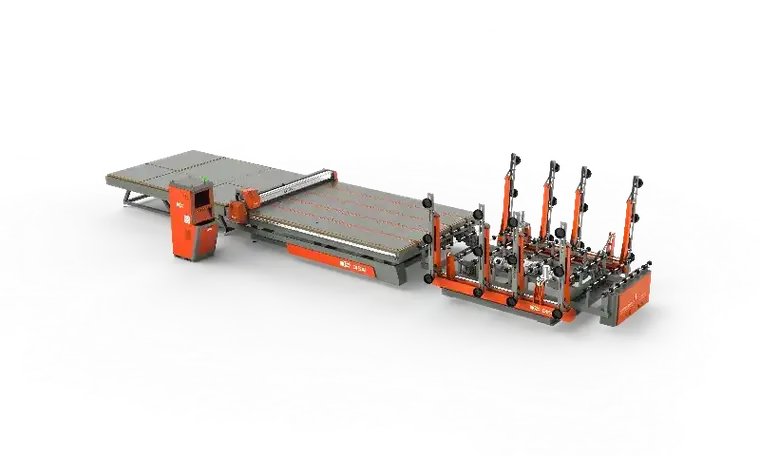
Regardless of which category attracts you, filter every candidate through these five criteria before making a purchase:
- Cutting accuracy and repeatability: Manual cutters rely on your hand stability; machines use rails and stoppers. If you cut more than ten identical panels per week, choose a bench or CNC model.
- Maximum glass thickness and sheet size: Verify the spec sheet supports the thickest glass you plan to process. A cutter rated for 4 mm float glass will not survive daily work on 8 mm mirror glass.
- Ease of setup and learning curve: A CNC machine demands time to learn CAD software, while a bench cutter can be used the day it arrives. Be realistic about your willingness to learn.
…
For more detailed information and recommendations regarding glass cutters for home use, please click here: https://www.disaiglass.com/industry-news/best-glass-cutters/


