
What systems does a glass tempering furnace consist of?
A glass tempering furnace is a complex system designed to heat-treat glass to improve its strength and safety characteristics. The tempering process involves heating the glass to a high temperature and then rapidly cooling it. This process requires several integrated systems to ensure precise control and consistent quality. Here are the main systems that a glass tempering furnace typically consists of:
Glass tempering furnace system composition
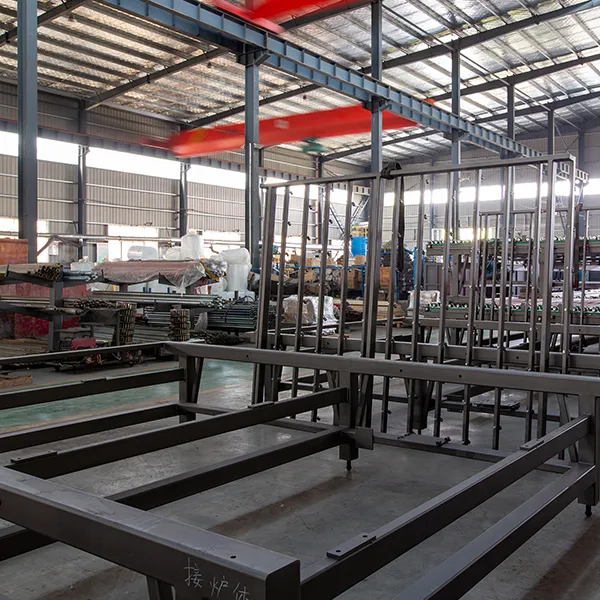
1. Heating System
Furnace Chamber: The main body where the glass is heated. It is insulated to retain heat and ensure uniform temperature distribution.
Heating Elements: These can be electric (resistance heating elements) or gas-fired burners, providing the necessary heat to bring the glass to the tempering temperature, typically around 620-700°C (1148-1292°F).
Temperature Control: Thermocouples and sensors monitor the temperature inside the furnace. A control system adjusts the power to the heating elements to maintain the desired temperature profile.
2. Quenching System
Air Blowers: High-power fans that force air onto the heated glass to cool it rapidly. This rapid cooling is critical to developing the tempered glass’s strength properties.
Air Distribution System: Includes nozzles and ducts that direct the air flow uniformly over the surface of the glass. The design ensures even cooling to prevent stress imbalances and potential breakage.
Cooling Control: Adjusts the air pressure and flow rates to achieve the desired cooling rate and ensures uniform tempering across the glass surface.
3. Conveying System
Roller Conveyor: A system of heat-resistant rollers that transport the glass through the furnace. These rollers are designed to handle high temperatures without deforming.
…
For more detailed information about the composition of the glass tempering furnace system, please click here: https://www.shencglass.com/en/a/news/glass-tempering-furnace-system-composition.html


