
Steel vs Concrete: Why Factories Choose Steel Structure
When planning a new factory or industrial facility, one of the most consequential decisions is the choice of building material. For decades, concrete reigned supreme in heavy construction. Yet a quiet shift has occurred: most modern factories now opt for steel structures. This isn’t a matter of trend—it’s the result of engineering economics, project timelines, and long-term operational needs. Below, we dissect the key reasons why steel consistently outperforms concrete for manufacturing facilities, drawing on real-world project experience from specialists like HCGG.
1. Construction Speed: The Decisive Advantage
Time is money in industrial construction. Every month a factory is idle represents lost production revenue. Steel structures can be erected 30–50% faster than equivalent concrete buildings. The reasons are structural: steel beams and columns are prefabricated off-site in controlled conditions, then delivered and assembled on-site with bolted connections. Concrete, by contrast, requires formwork, rebar installation, curing time (often 28 days for full strength), and stripping—each stage weather-dependent.
For a 10,000-square-metre factory, a steel frame can be completed in 8–12 weeks, whereas a concrete frame may take 20–28 weeks. This time saving directly reduces financing costs, labour overheads, and accelerates time-to-market. For manufacturers racing to meet demand, the choice is clear.
HCGG’s Modular Approach
Companies like HCGG refine this further with modular design, enabling parallel work streams: foundation preparation and steel fabrication happen simultaneously. Their engineers optimise joint designs to minimise on-site welding (which slows progress) in favour of high-strength bolting. This level of pre-planning is rarely feasible with cast-in-place concrete.
2. Cost Efficiency Over the Building Lifecycle
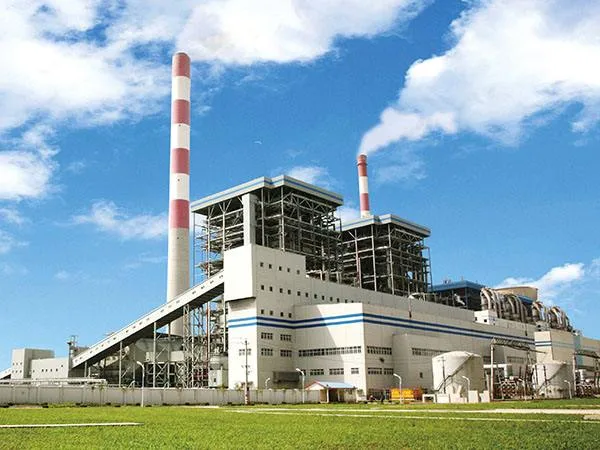
Initial cost comparisons often show concrete and steel within a similar range, but total cost of ownership reveals steel’s edge. Steel structures require less substantial foundations because steel is lighter—a typical steel frame weighs about 60% of a concrete equivalent. This reduces excavation, concrete quantity, and foundation rebar. Moreover, steel’s span capacity (clear spans up to 60 metres without intermediate columns) yields more usable floor area and layout flexibility. A concrete building with similar column-free space would require expensive post-tensioned slabs or transfer beams.
…
For more information about steel and concrete: Why factories choose steel structures, please click to visit:https://www.hcggsteel.com/a/news/difference-between-steel-structure-and-concrete-structure.html


