
How to Improve the Indexing Accuracy of CNC Rotary Tables Using Crossed Roller Bearings
In modern manufacturing, precision is the cornerstone of high-quality production. CNC rotary tables are integral to milling, drilling, and multi-axis machining operations, where even a tiny positioning error can affect the final part quality. Among the various factors influencing performance, indexing accuracy—the ability to rotate and stop exactly at predefined angles—is critical.
One of the most influential components in achieving this precision is the crossed roller bearing. By understanding and optimizing these bearings, manufacturers can significantly enhance rotary table accuracy and reliability.
How to Improve the Indexing Accuracy of CNC Rotary Tables Using Crossed Roller Bearings
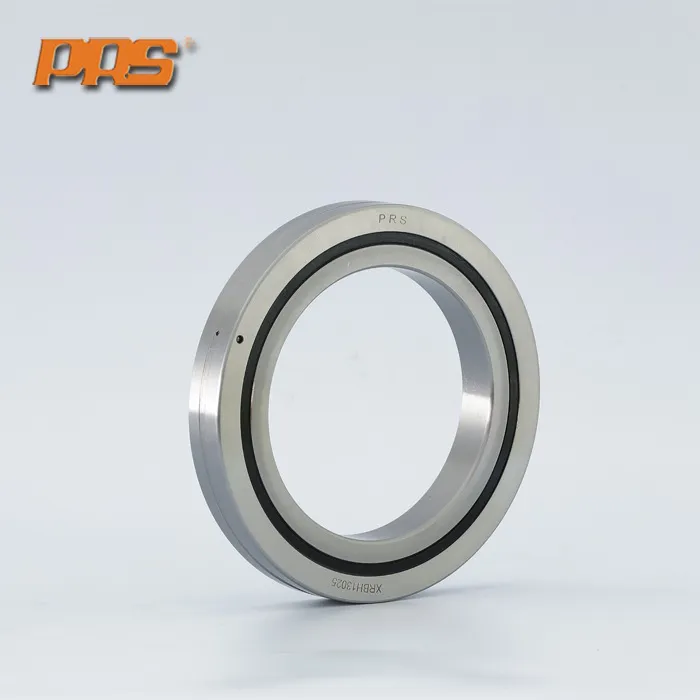
1. Understanding Crossed Roller Bearings
Crossed roller bearings are uniquely designed with cylindrical rollers arranged alternately at 90° angles. This configuration allows the bearing to:
Support combined loads: Radial, axial, and moment loads can be handled simultaneously.
Maintain high rigidity: Essential for precise rotation under heavy machining forces.Minimize backlash: Ensures smooth and accurate indexing.
Because of these advantages, crossed roller bearings are the go-to choice for high-precision CNC rotary tables, from automotive components to aerospace tooling.
Real-world insight: In mold-making applications, using a rotary table without crossed roller bearings can introduce angular errors exceeding 0.01°, while properly installed crossed roller bearings can reduce this to less than 0.001°.
2. Proper Installation is Critical
Even the highest-quality bearing cannot deliver precision if installed incorrectly. Key installation practices include:
Alignment: Ensure bearing rings are perfectly aligned with the rotary table axis. Misalignment can cause uneven load distribution, reducing both accuracy and bearing lifespan.
Torque Settings: Fasten bolts using manufacturer-recommended torque. Too tight creates internal stress; too loose introduces unwanted play.
Clean Environment: Dust, metal shavings, or oil residues can compromise smooth rotation. Always perform installation in a clean, controlled environment.
Tip: Use precision dial indicators or alignment fixtures during installation to guarantee concentricity within micrometer tolerances.
3. Optimize Bearing Preload
Preload is the controlled axial load applied to remove internal clearance. Correct preload ensures:
Minimal backlash: Enhances indexing precision.
Even load distribution: Prevents premature wear and ensures consistent rotation.
Caution: Over-preloading increases friction and accelerates wear, while under-preloading introduces vibration and angular errors. Use torque-controlled adjustments or precision shims to achieve the manufacturer-recommended preload.
Industry example: Aerospace component machining often requires preload adjustments within ±5 μm to achieve repeatable accuracy over thousands of rotations.
…
For more detailed information on how to improve the indexing accuracy of CNC rotary tables using crossed roller bearings, please click to visit: https://www.prsbearings.com/a/news/improving-the-indexing-accuracy-of-cnc-rotary-tables-using-crossed-roller-bearings.html


