
How to Measure Trailer Turntable Bearing Diameter for Replacement: A Comprehensive Step-by-Step Guide
Trailer turntables serve as the pivotal connection between a trailer and its towing vehicle, enabling smooth rotational movement and precise maneuverability. At the heart of these turntables are bearings, small yet essential components that absorb load and allow for rotation. Over time, bearings are subject to wear and tear due to repeated stress, exposure to dirt, moisture, and vibration. When bearings degrade, symptoms such as unusual noise, uneven turning, or stiffness may appear, potentially escalating into mechanical failure if not addressed promptly. Replacing worn bearings is therefore not merely a maintenance task—it is a safety-critical operation. However, selecting the correct replacement bearing requires accurate measurement of its diameter. Misjudging this dimension can lead to fitting problems, accelerated wear, or damage to the turntable assembly. This guide provides a thorough, step-by-step method for measuring trailer turntable bearings, ensuring precision, safety, and long-term performance.
Understanding Trailer Turntable Bearings
Trailer turntable bearings generally fall into two categories: tapered roller bearings and ball bearings.
Tapered roller bearings are typically used in heavy-duty trailers, where they handle both radial and axial loads. They are capable of sustaining high torque while distributing forces evenly along the roller surfaces.
Ball bearings, on the other hand, are more common in lighter trailers. They excel in minimizing friction and supporting moderate loads but are not designed for high axial forces.
Regardless of type, three key dimensions determine compatibility with the turntable assembly:
Inner diameter (ID) – matches the spindle or shaft of the turntable.
Outer diameter (OD) – ensures a snug fit in the housing or race.
Width (thickness) – guarantees proper axial alignment and prevents binding.
Other factors, such as bearing type, load rating, and seal configuration, also play a crucial role in performance and longevity.
Measure Trailer Turntable Bearing Diameter for Replacement
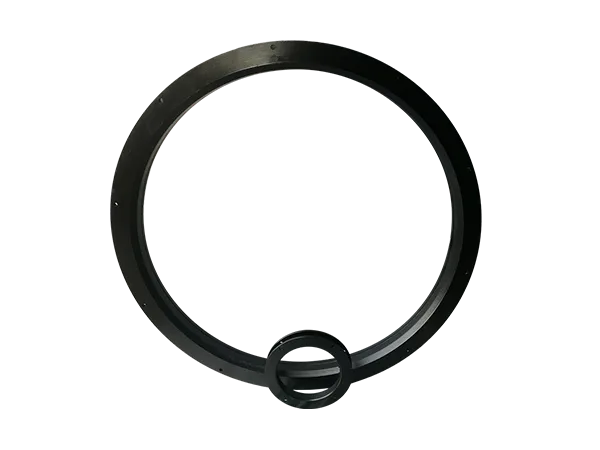
Before starting measurements, the bearing must be carefully removed from the turntable. This process typically involves disassembling the turntable assembly, cleaning components, and inspecting for wear or damage. Always prioritize safety: wear protective gloves and eye protection, and use the correct tools for disassembly.
Step 1: Gather the Necessary Tools
Accurate measurements begin with having the right tools. You will need:
Digital calipers: Precise down to 0.01 mm; essential for measuring inner and outer diameters accurately.
Micrometer: Useful for smaller tolerances, especially when checking inner diameter and width.
Ruler or tape measure: Only for rough, preliminary measurements; not recommended for final specifications.
Notebook and pen: To record dimensions clearly and avoid mistakes.
While a ruler can provide a rough estimate, relying solely on it risks ordering the wrong bearing, which can result in improper fit, vibration, and accelerated wear.
Step 2: Clean the Bearing and Turntable
Before any measurements, thoroughly clean the bearing and its spindle. Remove all grease, dirt, or debris, as these contaminants can interfere with accurate readings. Use a clean cloth, mild degreaser, or solvent to wipe surfaces. While cleaning, inspect the bearing and spindle for:
…
For more detailed information on how to measure and replace trailer turntable bearings, please click here: https://www.mcslewingbearings.com/a/news/measure-trailer-turntable-bearing-diameter-for-replacement.html


