
Operating Cost Analysis: Linear Vibrating Screens vs. Other Separators – A Practical Guide for Industrial Buyers
In industrial material processing, separation efficiency is only one side of the equation. For plant managers, procurement engineers, and project investors, the more decisive factor often lies in long-term operating costs. Equipment that appears affordable at the purchasing stage may generate substantial energy consumption, maintenance expenses, and downtime losses over time. Therefore, understanding the operating cost structure of different separation technologies is essential before making a final investment decision.
This article provides a comprehensive operating cost comparison between linear vibrating screens and other commonly used separation systems, including circular vibrating screens, rotary separators, trommel screens, and air classifiers. By examining energy usage, wear parts, maintenance frequency, labor requirements, and lifespan performance, we aim to help industrial buyers make a financially sound decision.
Linear Vibrating Screens and Competing Separation Technologies
A linear vibrating screen operates by generating linear motion through dual vibration motors or an exciter system. Material moves forward in a straight path while being stratified and screened through mesh layers. This structure is widely used in mining, aggregates, metallurgy, chemical processing, recycling, and food industries because of its stable performance and high throughput capacity.
In contrast, circular vibrating screens generate elliptical or circular motion and are typically used in coarse material classification. Rotary separators rely on centrifugal force and are more common in fine powder screening. Trommel screens rotate cylindrical drums to separate materials based on size and are often applied in waste management and compost processing. Air classifiers use airflow dynamics to separate particles by weight and density rather than size.
While each system serves a specific technical purpose, the economic performance over the equipment lifecycle varies significantly.
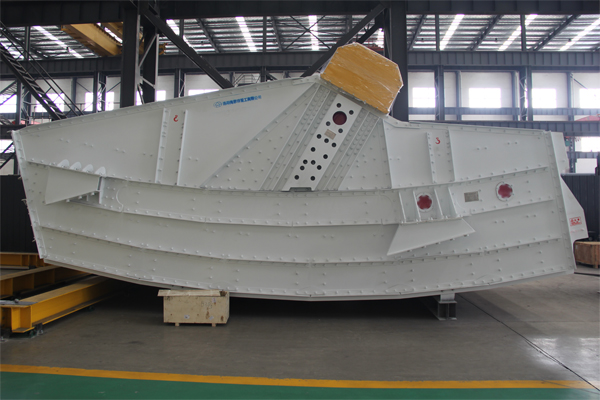
Initial Investment vs. Total Lifecycle Cost
When comparing equipment costs, many buyers focus primarily on the initial purchase price. Linear vibrating screens generally offer a competitive upfront cost due to their relatively simple mechanical structure. The absence of complex rotating drums or high-speed centrifugal components reduces manufacturing complexity.
However, total lifecycle cost is influenced by several ongoing factors:
Energy consumption
Wear and spare parts replacement
Maintenance labor
Downtime losses
Operational efficiency
When these variables are calculated over a five- to ten-year period, the cost gap between separation technologies becomes more evident.
Energy Consumption Analysis
Energy usage represents one of the most significant operational expenses in continuous production environments. Linear vibrating screens typically operate with dual motors that provide controlled amplitude and frequency. Because the motion path is direct and material moves efficiently along the deck, energy utilization remains relatively stable and predictable.
…
For more detailed information on the operating costs of linear vibrating screens, please click to visit: https://www.hsd-industry.com/news/linear-vibrating-screen-operating-cost/


