
Optimizing Load Capacity Calculation for Heavy-Duty Trailer Slewing Rings: A Practical Engineering Guide for Performance and Reliability
In modern heavy transportation and industrial logistics, the reliability of key mechanical components directly determines operational safety and efficiency. Among these components, slewing rings used in heavy-duty trailers play a decisive role in enabling controlled rotation under high loads. Whether in modular transport, construction equipment hauling, or specialized industrial trailers, accurate load capacity calculation is not just a design step—it is the foundation of long-term performance and risk control.
Many equipment failures in real-world applications can be traced back to improper bearing selection or inaccurate load estimation. For manufacturers, engineers, and procurement teams, understanding how to optimize slewing ring load calculations can significantly reduce downtime, extend service life, and improve overall return on investment.
What Is a Slewing Ring and Why It Matters in Heavy-Duty Trailers
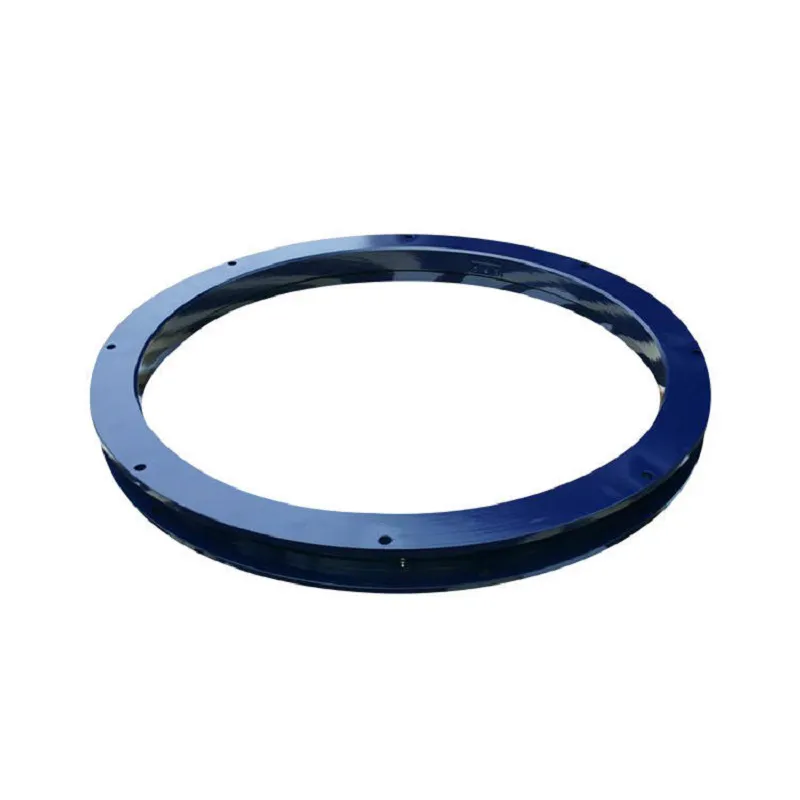
A slewing ring, often referred to as a turntable bearing, is a large-diameter rotational bearing designed to support combined loads, including axial forces, radial forces, and tilting moments. Unlike conventional bearings, slewing rings are engineered to handle multi-directional loads simultaneously while maintaining smooth rotational performance.
In heavy-duty trailer systems, slewing rings are commonly installed between the chassis and the load platform, enabling controlled articulation and steering. This is especially critical in:
Low-bed trailers transporting oversized equipment
Modular trailers used in wind turbine or bridge transport
Self-propelled transporters in heavy industry
When these systems operate under uneven terrain, sudden braking, or off-center loads, the slewing ring becomes the primary component absorbing and redistributing stress. This makes precise load calculation essential to prevent structural fatigue, deformation, or sudden failure.
Why Load Capacity Calculation Is Critical for Safety and Cost Control
Accurate load capacity calculation directly impacts three key areas:
1. Operational Safety
An undersized slewing ring may fail under peak loads, leading to instability or even catastrophic accidents during transport.
2. Equipment Lifespan
Incorrect load estimation accelerates fatigue damage in rolling elements and raceways, significantly reducing service life.
3. Cost Efficiency
Oversized bearings increase procurement costs, add unnecessary weight, and may negatively affect fuel efficiency and payload capacity.
…
For more detailed information on the calculation and optimization of the load-bearing capacity of heavy-duty trailer slewing bearings, please click to visit: https://www.mcslewingbearings.com/a/news/load-capacity-calculation-for-heavy-duty-trailer-slewing-rings.html


