
Lubrication Guide for High-Speed Thin Section Ball Bearings: Ensuring Precision and Longevity
In the world of precision engineering, high-speed thin section ball bearings play a critical role in applications ranging from aerospace actuators to robotics, medical devices, and high-performance industrial machinery. Unlike standard bearings, thin section ball bearings are designed with reduced cross-sectional thickness while maintaining their load-carrying capabilities. This unique design allows them to operate at higher speeds and fit into constrained spaces, but it also imposes stringent requirements on lubrication to ensure optimal performance, reliability, and longevity.
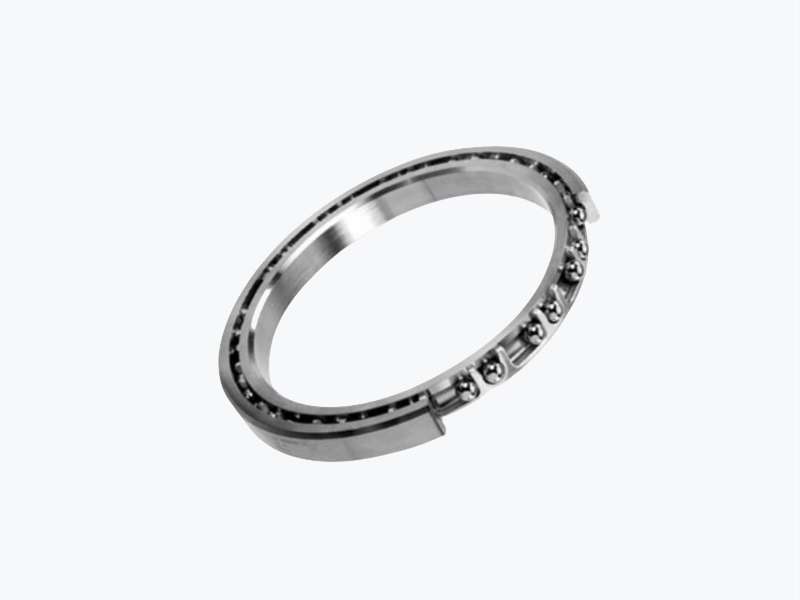
Understanding the Role of Lubrication
Lubrication in high-speed thin section ball bearings is not merely a maintenance task—it is a critical operational parameter. Proper lubrication minimizes friction, reduces heat generation, and protects the bearing from contamination. For thin section bearings, inadequate lubrication can lead to accelerated wear, excessive noise, vibration, and even premature failure, compromising the precision of the entire system.
Lubricants serve three primary functions:
Friction Reduction – By forming a thin film between rolling elements and races, lubricants prevent direct metal-to-metal contact, which reduces wear.
Heat Dissipation – High-speed operation generates substantial heat. Lubricants help absorb and transfer heat away from the bearing, maintaining stable operating temperatures.
Corrosion and Contamination Protection – Lubricants shield bearing surfaces from moisture, oxidation, and particulate ingress, extending service life.
Selecting the Right Lubricant
Choosing the correct lubricant is the cornerstone of effective maintenance for high-speed thin section ball bearings. The selection depends on several factors including bearing speed, operating temperature, load, and environmental conditions.
1.Grease Lubrication:
Grease is widely used for thin section bearings due to its ease of application and ability to remain in place. High-speed applications require low-viscosity greases with a compatible base oil and stable thickener. Lithium-complex or polyurea greases are common, offering excellent thermal stability and shear resistance. Proper consistency ensures the grease distributes evenly across the raceways without creating excess drag that could limit bearing speed.
2.Oil Lubrication:
For ultra-high-speed or heavily loaded applications, circulating oil may be preferable. Oil provides superior heat dissipation, allows precise viscosity selection, and can carry away contaminants more effectively. Thin section bearings benefit from oils with high oxidation stability, low friction coefficients, and additives that prevent wear and corrosion. Delivery methods include oil bath, oil mist, or circulating oil systems, depending on the machine design.
3.Solid Lubricants:
In specific environments where traditional liquid or semi-solid lubricants are impractical—such as vacuum or extreme temperature applications—solid lubricants like graphite or molybdenum disulfide can be used. These materials provide a durable low-friction surface but often require careful installation and periodic monitoring.
…
For more detailed information on the lubrication guide for high-speed thin section ball bearings, please click to visit:https://www.prsbearings.com/a/news/lubrication-guide-for-high-speed-thin-section-ball-bearings.html


