What is the particle size range of the jaw crusher and what are the influencing factors?

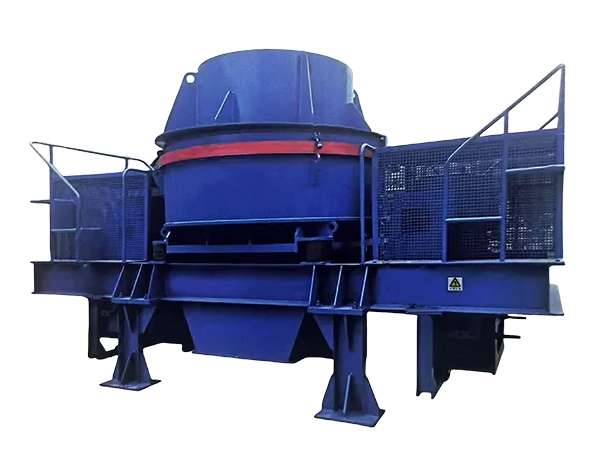
A jaw crusher’s particle size range depends on the specific machine’s design and settings. Generally, a jaw crusher is a primary crusher, meaning it’s used for the first stage of size reduction. They can handle very large feed material and produce a coarse product. The output size is primarily determined by the closed-side setting (CSS), the minimum distance between the jaws.

Particle Size Range of the Jaw Crusher

Jaw Crusher

Typically, jaw crushers have a reduction ratio of 6:1 to 8:1, meaning the output size is approximately one-sixth to one-eighth of the feed size. For large industrial jaw crushers, the feed size can be up to 1,000 mm, with an output size range of 0 to 200 mm. Laboratory-scale jaw crushers are much smaller, with feed sizes up to 200 mm and final sizes as fine as 1-6 mm.

Factors Influencing Jaw Crusher Particle Size

Several key factors affect the final particle size and the efficiency of the crushing process.

1. Jaw Crusher Design and Specifications:

Size of the Crusher: Larger jaw crushers generally produce larger output particle sizes.

Jaw Plate Design: The profile and material of the jaw plates (e.g., corrugated, smooth) impact the crushing action and the resulting particle size.

Toggle Plate Setting (Closed Side Setting – CSS): This is the most crucial factor. The CSS refers to the minimum gap between the fixed and movable jaw at the discharge opening. A smaller CSS results in finer output, while a larger CSS yields coarser material.

Angle of Nip: The angle at which the material is “nipped” between the jaws affects crushing efficiency and particle size.

Eccentric Throw: The distance the movable jaw travels also plays a role in the crushing action.

2. Material Properties:

Hardness and Abrasiveness: Harder and more abrasive materials require more crushing force and can lead to faster wear on jaw plates, potentially affecting particle size consistency over time.

Toughness: Tough materials resist fracture and may require more passes or a tighter CSS to achieve the desired particle size.

Moisture Content: High moisture can cause material to stick together, leading to clogging and inconsistent particle sizing.

Feed Size Distribution: The size of the material being fed into the crusher (feed size) directly influences the output particle size. If the feed is too large, it may not be properly crushed.

Shape of Feed Material: Irregularly shaped feed can sometimes lead to bridging or inconsistent crushing.

Jaw Crusher

3. Operating Conditions:

Feed Rate: Overloading the crusher with too high a feed rate can lead to reduced efficiency and a coarser product, as material doesn’t have enough time to be properly crushed.

For more detailed information about the crushing size range of jaw crusher and its influencing factors, please click here: https://www.yd-crusher.com/a/news/particle-size-range-of-jaw-crusher.html

What are the differences between jaw crusher and impact crusher?

In the field of crushing equipment, jaw crushers and impact crushers are two of the most commonly used machines. Both play vital roles in mining,construction, and recycling industries, but they operate in very different ways and are suitable for different applications.

A jaw crusher is primarily designed for the first stage of crushing, handling large and hard materials such as granite, basalt, and ores. It works by compressing rocks between a fixed and a movable jaw plate, producing a more uniform and relatively coarse output.

On the other hand, an impact crusher is typically used for secondary or fine crushing.It reduces material size by using high-speed impact force, making it ideal for softer or medium-hard stones like limestone and concrete. The impact crusher produces more cubic-shaped particles,which are widely preferred in construction and road building.

Differences Between Jaw Crusher and Impact Crusher

Jaw Crusher

Jaw Crusher

A jaw crusher operates by compressing material between two jaws, one fixed and one movable. The material is fed into the top of the crushing chamber and is crushed as the movable jaw oscillates towards the fixed jaw.

The crushed material then falls through the bottom opening.

Key Characteristics:

Crushing Principle: Compression.

Material Suitability: Ideal for very hard, abrasive materials like granite, basalt, and various ores. They are known for their robustness and ability to handle tough, uncrushable materials.

Product Shape: Produces a more angular, flaky, and less uniform product.

Maintenance: Generally lower maintenance costs due to fewer wearing parts and simpler design.

Wear Parts: The main wear parts are the jaw plates, which are typically made from manganese steel.

Capacity: Can handle very large feed sizes.

More detailed information on tunnel lining quality control methods can be found at: https://www.yd-crusher.com/a/news/differences-between-jaw-crusher-and-impact-crusher.html

What are the methods to control the quality of tunnel lining?

Tunnel lining plays a critical role in ensuring the structural stability, safety, and durability of underground construction projects. As the permanent support structure, the lining must withstand ground pressure, water ingress, and long-term environmental influences while maintaining serviceability throughout the tunnel’s lifespan. To achieve these objectives, stringent quality control measures are essential during design, material selection,manufacturing,and construction phases.

Quality control in tunnel lining involves systematic monitoring and inspection to verify that materials, dimensions, installation methods, and finished structures meet specified standards and project requirements. This process not only helps to prevent defects such as cracks,misalignment, and water leakage but also enhances the tunnel’s operational reliability and reduces future maintenance costs.

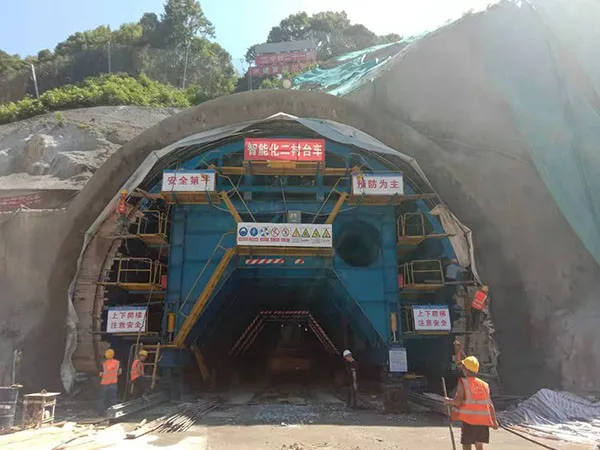
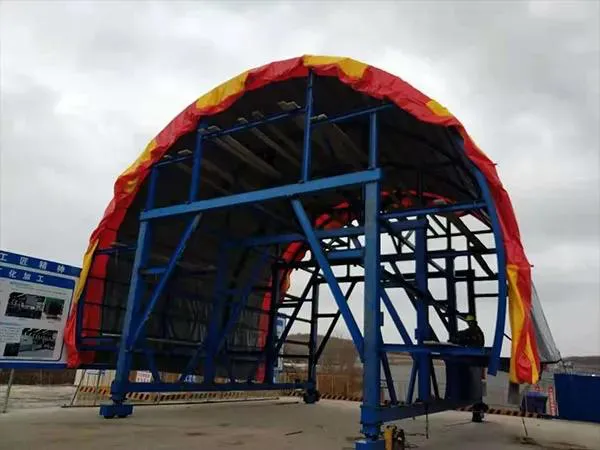
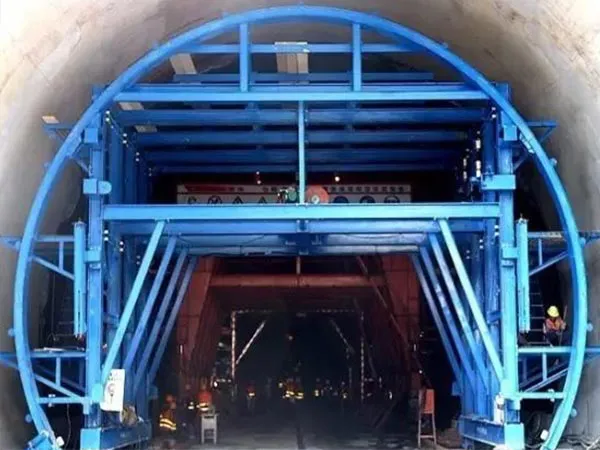
Tunnel Lining Quality Control Method

Tunnel Lining Formwork

I. Pre-Construction Phase (Design & Planning):

Detailed Geotechnical Investigations: Thorough understanding of ground conditions (rock type, soil, water table, faults) is paramount. This informs the design of the lining, material selection, and construction methods.

Appropriate Lining Design: The design must consider anticipated loads (ground pressure, water pressure, seismic activity), service life, and environmental factors.

This includes selecting the correct lining thickness, reinforcement, and material (e.g., sprayed concrete, precast segments, cast-in-place concrete).

Material Specification: Clearly define the required properties for all materials, including concrete strength, durability, workability, aggregate quality, admixtures, and reinforcement steel.

Quality Management Plan (QMP): Develop a comprehensive plan outlining all quality control (QC) and quality assurance (QA) procedures, responsibilities, inspection points, and documentation requirements.

II. Construction Phase (Execution & Monitoring):

A. Material Quality Control:

Aggregates:

Sampling and Testing: Regular testing for gradation, soundness, cleanliness (silt/clay content), organic impurities, and moisture content.

Storage: Proper storage to prevent contamination and segregation.

Cement:

Source Approval: Ensure cement comes from approved manufacturers.

Testing: Check for fineness, setting time, soundness, and compressive strength.

Storage: Protect from moisture.

Admixtures:

Verification: Ensure type and dosage are as per design.

Testing: Confirm effectiveness and compatibility with other materials.

Reinforcement Steel:

Mill Certificates: Verify grade, dimensions, and mechanical properties.

Inspection: Check for rust, damage, correct bending, and placement.

More detailed information on tunnel lining quality control methods can be found at: https://www.gf-bridge-tunnel.com/a/blog/tunnel-lining-quality-control-method.html

What are the differences between primary and secondary lining of tunnels?

Tunnel linings are critical components in excavation projects, providing structural support and ensuring long-term stability. They are typically categorized into primary and secondary linings, each serving distinct purposes during and after construction.

The primary lining is the initial support system installed immediately after excavation. Its main function is to stabilize the newly excavated ground, prevent immediate collapses, and support the surrounding rock or soil mass.

Tunnel Lining Formwork

Here are some key characteristics of primary linings:

Immediate Support: It’s installed very close to the tunnel face as excavation progresses.

Temporary or Semi-Permanent: While it provides immediate support, it can be temporary and later supplemented or become part of the permanent structure, depending on the design.

Materials: Common materials include:

Shotcrete: Sprayed concrete that conforms to the irregular rock surface.

Steel Ribs (Lattice Girders): Structural steel elements that provide initial strength.

Rock Bolts/Dowels: Rods inserted into the rock to improve its stability.

Wire Mesh: Used in conjunction with shotcrete to reinforce it.

Purpose: To manage ground loads immediately after excavation, control deformation, and create a safe working environment.

Rough Finish: The finish is generally rough and uneven, as its primary concern is structural integrity, not aesthetics or waterproofing.

Secondary Lining

The secondary lining is the permanent, final lining installed after the primary lining is in place and the ground has reached a more stable state. It is designed for the long-term operational life of the tunnel.

Here are some key characteristics of secondary linings:

Permanent Structure: It forms the final interior surface of the tunnel.

Long-Term Functionality: Designed to resist long-term ground pressures, provide waterproofing, ensure durability, and offer an aesthetic finish.
Materials: Most commonly made of:

Cast-in-place Concrete: Poured concrete that creates a smooth, continuous surface.
Precast Concrete Segments: Manufactured off-site and assembled within the tunnel, often used in bored tunnels (e.g., TBM tunnels).

Purpose: To provide the ultimate structural strength, ensure waterproofing, create a smooth internal surface for operational efficiency (e.g., air flow, reduced friction), and offer protection against environmental factors.

More detailed information about the difference between primary and secondary tunnel lining can be found at: https://www.gf-bridge-tunnel.com/a/blog/difference-between-primary-and-secondary-tunnel-lining.html

How to maintain inverted bridge formwork

Maintaining inverted bridge formwork is crucial for safety and for ensuring the quality of the concrete structure. This involves a systematic approach that includes regular inspection, proper cleaning, and correct storage and handling.

Inverted Bridge Formwork Maintenance

inverted bridge formwork

1. Design and Planning:

Detailed Drawings: Before starting, have detailed drawings that show the formwork’s dimensions, materials, support system, and assembly sequence.

Material Selection: Choose high-quality, durable materials suitable for the expected loads and environmental conditions.

Load Calculations: Accurately calculate all potential loads, including the weight of wet concrete, rebar, workers, and equipment, to ensure the formwork can safely support them.

Safety Factors: Incorporate appropriate safety factors into your design to account for unforeseen circumstances.

2. Pre-Assembly and Inspection:

Pre-fabrication: Whenever possible, pre-fabricate large sections of the formwork on the ground. This allows for better quality control and faster, safer installation.

Component Inspection: Before assembly, thoroughly inspect all formwork components for damage, defects, or wear. Replace any faulty parts.

Cleaning: Ensure all surfaces that will be in contact with concrete are clean and free of debris, rust, or old concrete.

3. Erection and Installation:

Level and Plumb: Erect the formwork accurately, ensuring it is level, plumb, and true to the specified dimensions and alignment.

Secure Connections: All connections, including bolts, clamps, and ties, must be securely fastened to prevent movement or displacement during concrete pouring.

Proper Shoring and Bracing: Install an adequate amount of shoring and bracing to support the formwork’s weight and the concrete’s pressure. The supports should be evenly distributed and firmly seated.

Access and Working Platforms: Provide safe access points and stable working platforms for workers to install rebar, concrete, and inspect the formwork.

inverted bridge formwork

4. During Concrete Pouring:

Monitor and Inspect: Continuously monitor the formwork during concrete placement for any signs of deflection, bulging, or leakage.

Controlled Pouring: Pour concrete in a controlled manner, at a rate that doesn’t overload the formwork. Avoid dropping concrete from excessive heights, which can cause impact loads.

For more detailed information on how to maintain the inverted bridge formwork, please click here: https://www.gf-bridge-tunnel.com/a/blog/inverted-bridge-formwork-maintenance.html

Detailed explanation of the working principle of the tunnel lining trolley

tunnel lining trolley, also known as a formwork trolley or a segment erector, is a crucial piece of equipment used in the construction of tunnels, particularly for the installation of the final lining. Its working principle can be broken down into several key stages and components.

Tunnel Lining Trolley Working Principle

Tunnel Lining Trolley

1. Purpose of the Tunnel Lining Trolley

The primary purpose of the tunnel lining trolley is to provide a movable, adjustable support structure for the formwork (mould) into which concrete is poured to create the tunnel lining. It also often facilitates the handling and precise positioning of precast concrete segments in segmental lining methods.

2. Key Components and Their Functions

Main Frame/Structure: This is the robust, load-bearing backbone of the trolley, typically made from heavy-duty steel. It must be strong enough to support the weight of the formwork, fresh concrete, and any associated machinery.

Traveling Mechanism: The trolley needs to move along the tunnel. This is usually achieved with electric motors driving wheels or tracks that run on rails laid on the tunnel invert (floor). This allows the trolley to advance to the next section after a lining pour is completed.

Hydraulic Jacks and Cylinders: These are critical for the precise positioning and adjustment of the formwork.

Vertical Jacks: Used to lift and lower the entire formwork assembly to the correct height and ensure proper alignment with the tunnel axis.

Horizontal Jacks/Telescopic Beams: Used to expand or retract the formwork to match the exact radius and cross-section of the tunnel. These also enable the formwork to be “struck” (retracted) from the cured concrete after a pour.

Transverse Jacks: Used for lateral alignment, ensuring the formwork is centered within the tunnel.

Formwork (Mould): This is the actual surface against which the concrete is cast. It’s typically made of steel plates, precisely curved to the desired tunnel profile. The formwork is often segmented longitudinally and circumferentially to allow for easier stripping and adjustment.

For more detailed information about the working principle of the tunnel lining trolley, please click here: https://www.gf-bridge-tunnel.com/a/blog/tunnel-lining-trolley-principle.html

How to customize trailer turntable bearing size

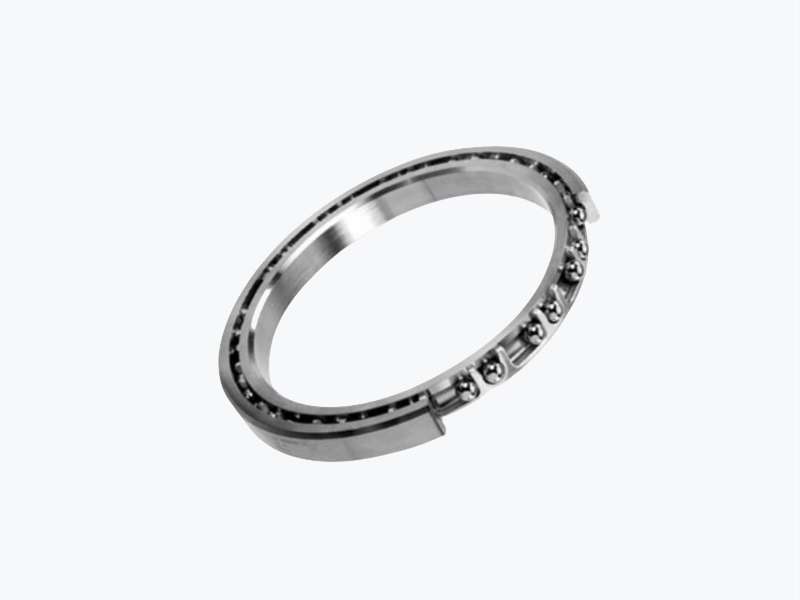
Trailer turntable bearings play a critical role in ensuring smooth rotation and reliable load distribution in trailers, particularly in heavy-duty applications such as construction, agriculture, and transport. Selecting the correct bearing size is essential to match the specific weight, load conditions, and rotational requirements of a trailer.

Customizing trailer turntable bearing size allows manufacturers and users to optimize performance,reduce wear, and extend the service life of the trailer. By considering factors such as inner and outer diameter, load capacity, and rotational speed, businesses can tailor bearings to meet exact operational needs.

How to Customize Trailer Turntable Bearing Size

Trailer Turntable Bearing

Customizing a trailer turntable bearing size involves several critical steps to ensure proper fit, function, and safety. Here’s a breakdown of the process:

1. Determine Current Bearing Specifications:

Measure Existing Bearing: Carefully measure the inside diameter (ID), outside diameter (OD), and width of your current turntable bearing.

Identify Bearing Type: Note if it’s a ball bearing, roller bearing, or a slewing ring.

Check for Markings: Look for any part numbers, manufacturer names, or load ratings stamped on the bearing. This information can be invaluable for cross-referencing.

2. Assess Trailer Requirements:

Load Capacity: What is the maximum weight the trailer will carry? This is crucial for selecting a bearing with an adequate dynamic and static load rating.

Operating Environment: Will the trailer operate in harsh conditions (dusty, wet, extreme temperatures)? This influences the choice of sealing and lubrication.

Rotational Speed: For most turntables, speeds are relatively low, but it’s still a factor.

Mounting Configuration: How is the current bearing attached to the trailer frame and the turntable?

Space Constraints: Measure the available space for the bearing to ensure the new one will fit without interference.

3. Reasons for Customization:

Increased Load Capacity: If you’re upgrading the trailer’s capacity.

Improved Durability: For heavier-duty applications or longer service life.

Non-Standard Application: If off-the-shelf bearings don’t meet specific design needs.

Replacement of Obsolete Parts: When original parts are no longer available.

4. Sourcing a Custom Bearing:

Bearing Manufacturers: Contact specialized bearing manufacturers that offer custom solutions. They will have engineers who can help design the right bearing.

For more detailed information on how to customize the size of trailer turntable bearings, please click here: https://www.mcslewingbearings.com/a/news/customize-trailer-turntable-bearing-size.html

What are the key points for purchasing agricultural trailer turntable bearings?

Agricultural trailers are indispensable tools on farms, used for transporting a wide variety of loads, from harvested crops and feed to machinery and implements. At the heart of a well-functioning agricultural trailer is its steering system, and a critical component of that system is the turntable bearing. This bearing allows the front axle to pivot smoothly, enabling the trailer to turn efficiently and safely. Selecting the right turntable bearing is not merely a matter of choosing one that fits; it requires a careful evaluation of factors that influence its longevity, load-bearing capacity, resistance to harsh conditions, and overall suitability for demanding agricultural environments. A poorly chosen bearing can lead to premature wear, steering difficulties, increased maintenance, and even safety hazards, ultimately impacting operational efficiency and costs. Therefore, understanding the key selection criteria is paramount for any farmer, trailer manufacturer, or maintenance professional.

Key Points for Selecting Agricultural Trailer Turntable Bearings

Agricultural Trailer Turntable Bearings

Here are the key points for selecting agricultural trailer turntable bearings:

Load Capacity: This is arguably the most critical factor. Agricultural trailers often carry heavy, sometimes uneven, loads. The turntable bearing must be rated to safely handle the maximum static and dynamic loads it will experience, including the weight of the trailer itself, the maximum payload, and any additional forces from uneven terrain or sudden movements.

Bearing Type and Design: Turntable bearings come in various designs, such as ball bearings, roller bearings, or a combination. Each type has different characteristics regarding load distribution, friction, and suitability for specific applications. For agricultural trailers, robust designs capable of handling axial, radial, and moment loads are typically required.

Material and Construction: The materials used for the bearing races, rolling elements, and seals are vital for durability. High-quality steel, often heat-treated for increased hardness and wear resistance, is essential. The bearing’s construction should also be robust enough to withstand shocks and vibrations common in agricultural operations.

For more detailed information on the key points of purchasing agricultural trailer turntable bearings, please click here: https://www.mcslewingbearings.com/a/news/key-points-for-selecting-agricultural-trailer-turntable-bearings.html

What is the load capacity of trailer turntable bearings?

The load capacity of trailer turntable bearings can vary significantly based on the specific type, size, and design of the bearing, as well as the application’s operating conditions. Manufacturers typically provide a range of load capacities, often expressed as an axial load in kN (kilonewtons) or tons. For example, some models of turntable bearings are designed for axle loads ranging from 7.5 to 250 kN (approximately 0.76 to 25.5 metric tons).

Factors Influencing Load Capacity

trailer turntable bearings

Several factors affect the actual load capacity of a turntable bearing:

Bearing Type and Design:

Ball bearings: These are suitable for lighter loads and agricultural vehicles, offering smooth rotation.

Roller bearings: These are used for heavier-duty applications and offer a much higher load capacity and durability.

Double-row bearings: These are designed to provide both precision and strength, handling a combination of axial, radial, and moment loads.

Operating Speed: The load capacity is inversely related to speed. For example, a bearing’s load capacity may increase by up to 40% at speeds below 25 km/h compared to its rated capacity at higher speeds. Conversely, load capacity may decrease at speeds above 25 km/h.

trailer turntable bearings

Application and Usage:

Road conditions: The capacity is typically rated for paved, standard road conditions.

Trailer type: The load capacity can be influenced by the type of trailer, such as two-axle full trailers, which may allow for a 10% increase in the specified axial load.

Mounting and Lubrication: Proper installation and maintenance, including correct lubrication, are critical to achieving the rated load capacity and ensuring the bearing’s longevity.

More detailed information on the load capacity of trailer turntable bearings can be found at: https://www.mcslewingbearings.com/a/news/trailer-turntable-bearing-load-capacity.html

What are the common problems of trailer turntable bearings and how to solve them

Trailer turntable bearings are crucial for the smooth and safe operation of trailers, especially those with steerable axles. When these bearings encounter issues, they can lead to significant problems.

Common Trailer Turntable Bearing Problems and Solutions

Trailer turntable bearings

1. Excessive Play or Looseness

Problem: This is often the most noticeable issue. You might hear clunking noises, feel excessive movement when turning, or see the trailer wheel assembly wobble.

It’s usually caused by wear in the bearing components, improper adjustment, or damaged mounting points.

Solution:

Inspection: First, safely jack up the trailer so the wheels are off the ground. Grip the wheel assembly firmly at 12 and 6 o’clock, then 3 and 9 o’clock, and try to rock it. Any significant movement indicates play.

Adjustment: Many turntable bearings have an adjustment mechanism (often a castellated nut and cotter pin). Consult your trailer’s manual for the correct torque specifications and adjustment procedure. Overtightening can damage the bearings, while undertightening leaves play.

Replacement: If adjustment doesn’t resolve the play, or if there’s visible damage to the bearing races or balls/rollers, replacement is necessary. This can be a complex job and might require specialized tools.

2. Roughness or Grinding Sensation

Problem: When you rotate the turntable by hand (with the trailer supported), you might feel a gritty, lumpy, or grinding sensation. This is a strong indicator of contaminated grease, damaged bearing components (pitting, spalling), or rust within the bearing.

Solution:

Lubrication: If the roughness is minor, sometimes a thorough cleaning and re-greasing with the correct type of high-quality grease can help.

Replacement: For significant roughness, especially if accompanied by noise, the bearings are likely damaged beyond repair and need to be replaced. Damaged bearing surfaces will continue to wear quickly.

For more detailed information on common problems and solutions for trailer turntable bearings, please click here:https://www.mcslewingbearings.com/a/news/common-trailer-turntable-bearing-problems-and-solutions.html