How much does a jaw crusher cost?

jaw crusher is a type of heavy-duty machinery commonly used in mining, construction, and demolition industries for reducing large rocks into smaller, more manageable sizes. Known for its simplicity, durability, and high efficiency, the jaw crusher operates by compressing material between a fixed jaw and a moving jaw. This mechanical pressure breaks down the material, making it ideal for primary crushing applications.The cost of a jaw crusher can vary widely depending on several factors, including size, capacity, brand, and features.

Jaw Crusher Cost

jaw crusher

Here are the main factors influencing the cost of a jaw crusher:

Size and Capacity: This is the biggest factor.

Feed Opening Size: Larger openings (e.g., 42″x30″, 50″x60″) can take bigger rocks and process more material.

Throughput (Tons Per Hour – TPH): Higher capacity crushers cost significantly more.

Small/Lab Scale: Very small units for lab testing might cost a few thousand to $15,000.

Small/Medium: Crushers for smaller operations, recycling, or contractors might range from $30,000 to $250,000.

Medium/Large: Standard quarry or mining sizes can range from $150,000 to $800,000+.

Very Large/Primary: The biggest units for high-volume mines can easily exceed $1,000,000 and go up to several million dollars.

New vs. Used:

New: Highest cost, comes with a warranty, latest technology, and manufacturer support.

Used: Significantly cheaper (often 30-70% of new price depending on condition and age), but comes with risks (wear and tear, unknown history, potential for higher maintenance, no warranty).

For more detailed information about how much a jaw crusher costs, please click here: https://www.yd-crusher.com/a/news/jaw-crusher-cost.html

How to customize desk and chair sets

Customized desk and chair sets offer a perfect blend of comfort, functionality, and personalized style. Designed to meet the unique needs of users across various settings—such as schools, offices, training centers, and home workspaces—these tailored furniture solutions provide ergonomic support, efficient use of space, and a cohesive aesthetic.Customizing a desk and chair set allows you to create a workspace that perfectly fits your needs, style, and ergonomic requirements.

Customized desk and chair sets

desk and chair sets

1. Define Your Goals & Needs (Planning Phase):

Purpose: What will you primarily use the desk/chair for? (Work, gaming, studying, crafting, art?) This influences size, features, and durability needs.

Ergonomics: This is crucial for comfort and health. Consider:

Ideal Desk Height: Elbows at a 90-degree angle when typing/writing.

Ideal Chair Height: Feet flat on the floor, knees at a 90-degree angle.

Chair Support: Lumbar support, adjustable armrests, seat depth.

Monitor Position: Top of the screen at or slightly below eye level.

Space: Measure your available space accurately. Consider room layout and clearance for the chair.

Aesthetics: What style are you aiming for? (Modern, rustic, industrial, minimalist?) What colors, materials, and finishes do you prefer?

Functionality: What features do you need?

Desk: Drawers, shelves, cable management, keyboard tray, specific surface area, sit-stand capability?

Chair: Adjustability (height, arms, back tilt, lumbar), swivel, wheels (type appropriate for your floor), headrest?

For more detailed information on how to customize the table and chair set, please click here: https://www.aoyangschoolfurniture.com/a/news/customized-desk-and-chair-sets.html

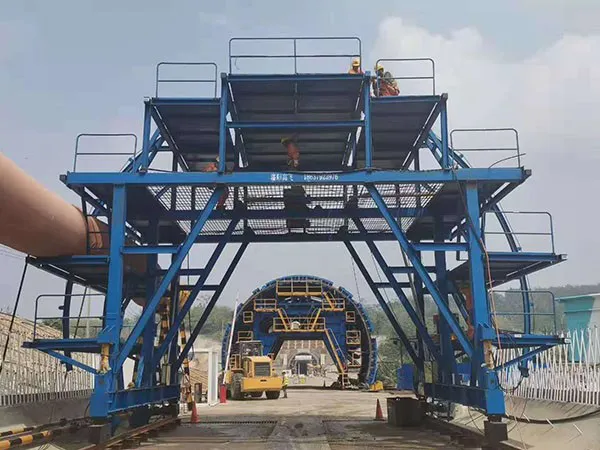
Steel vs. Aluminum Tunnel Lining Trolleys: Which Is More Durable?

While both steel and aluminum are used in the construction of tunnel lining trolleys, steel is generally considered more durable for this demanding application.

Differences between steel and aluminum tunnel lining trolleys

tunnel lining trolleys

Steel:

Higher Strength and Stiffness: Steel possesses significantly higher tensile and yield strength compared to aluminum. This allows steel trolleys to withstand the substantial loads and pressures exerted by wet concrete during the lining process without excessive deformation or failure. The inherent stiffness of steel also contributes to maintaining the precise shape of the tunnel lining formwork.

Better Resistance to Abrasion and Impact: Tunnel construction environments are often abrasive, with exposure to concrete, rock, and other materials. Steel offers superior resistance to wear and tear from abrasion and impacts, prolonging the lifespan of the trolley.

For more detailed information on the difference between steel tunnel lining trolleys and aluminum tunnel lining trolleys, please click to visit: https://www.gf-bridge-tunnel.com/a/blog/differences-between-steel-and-aluminum-tunnel-lining-trolleys.html

How to Reduce Tunnel Lining Equipment Noise

Reducing noise from tunnel lining equipment is crucial for worker health and safety, environmental compliance, and maintaining good relations with nearby communities. Noise in tunnels is often amplified due to the confined space and hard, reflective surfaces. Here’s a breakdown of strategies, following the hierarchy of controls (elimination/substitution, engineering controls, administrative controls, PPE).

How to Reduce Tunnel Lining Equipment Noise

tunnel lining equipment

1. Source Control (Elimination, Substitution & Engineering Modifications): This is the most effective approach.

Equipment Selection (Procurement):

Specify Low-Noise Equipment: When purchasing or renting equipment (TBMs, segment erectors, grout pumps, ventilation fans, locomotives), specify maximum noise emission levels in the tender documents. Request noise data from manufacturers (sound power levels).

Choose Quieter Technologies: Opt for electric or hydraulic systems over noisier pneumatic ones where feasible. Use variable speed drives (VSDs) for fans and pumps so they only run as fast as needed. Consider modern, quieter engine designs for diesel equipment.

Engineering Modifications to Existing Equipment:

Engine/Motor Enclosures: Install well-sealed acoustic enclosures around noisy engines, motors, and pumps (e.g., grout pumps, generators). Ensure adequate ventilation for cooling, often requiring silenced air inlets and outlets.

Silencers/Mufflers: Fit high-performance silencers to engine exhausts and ventilation fan inlets/outlets. Ensure they are correctly sized and maintained.

Vibration Isolation: Mount noisy components (engines, pumps, gearboxes) on vibration isolators (rubber mounts, springs) to prevent vibration from transferring into the equipment structure or tunnel lining, which then radiates noise.

Hydraulic System Noise: Use low-noise hydraulic pumps, accumulators to dampen pulsations, and flexible hoses instead of rigid pipes where possible to reduce vibration transmission.

Conveyor Systems: Use low-noise rollers, belt materials, and ensure proper alignment and tension to minimize noise. Enclose drive units.

Grouting Equipment: Use pulsation dampeners on pumps. Enclose mixers and pumps if possible.

Segment Erectors: Ensure smooth hydraulic operation. Maintain components to prevent jerky movements or impacts.

Damping Materials: Apply damping materials (e.g., constrained layer damping) to large vibrating panels on equipment (like enclosures or guards) to reduce noise radiation.

More detailed information on how to reduce noise from tunnel lining trolleys can be found at: https://www.gf-bridge-tunnel.com/a/blog/how-to-reduce-tunnel-lining-equipment-noise.html

How to Customize Tunnel Lining Trolleys

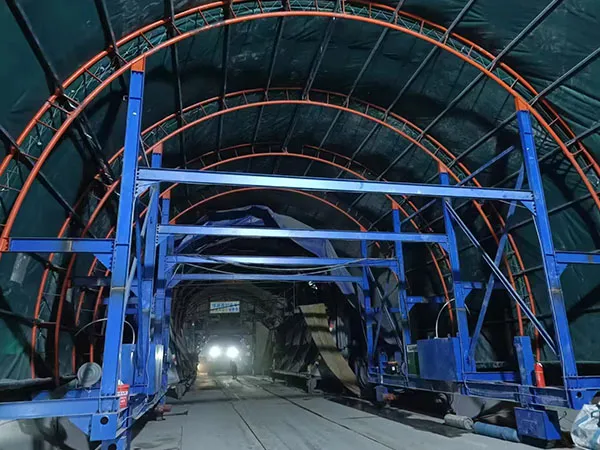
Customizing a tunnel lining trolley (also known as a formwork traveller or gantry) is a complex engineering process, essential for ensuring the trolley perfectly matches the specific requirements of a particular tunneling project. Standard, off-the-shelf trolleys rarely fit unique tunnel geometries, geological conditions, or construction methodologies.

Customized Tunnel Lining Trolley

tunnel lining trolley

1. Understanding the Need for Customization (The “Why”)

Customization is driven by specific project parameters:

Tunnel Geometry:

Shape: Circular, horseshoe, oval, rectangular, custom profiles.

Size: Specific diameter or width/height dimensions.

Gradient: Inclines or declines in the tunnel.

Curves: Horizontal or vertical curves requiring articulated or adaptable trolleys.

Lining Design:

Segment Length: The length of concrete poured in each cycle dictates the trolley length.

Concrete Thickness: Affects the weight the formwork must support.

Reinforcement: Complexity of rebar cages can influence formwork design and access.

Blockouts & Inserts: Need for openings (e.g., for cross-passages, ventilation, services) requires specific formwork modifications.

Geological Conditions:

Ground pressure might necessitate stronger structural designs or specific anchoring systems.

Concrete Specifications:

Pouring Method: Pumped concrete requires integration points for pipelines (slick lines).

Vibration Needs: Type, number, and placement of vibrators (internal/external) must be specified.

Curing Requirements: Potential need for integrated heating or insulation.

Construction Method & Schedule:

Cycle Time: Requirements for rapid stripping, moving, and setting influence hydraulic speed, automation levels, and overall design efficiency.

Single vs. Double Shell: Different approaches impact trolley design.

Integration: Needs to work seamlessly with other equipment (TBM, waterproofing applicators, rebar jigs).

Logistics & Site Constraints:

Transport Limitations: Size and weight restrictions for getting the trolley to and inside the tunnel. Often requires modular design for easier transport and assembly.

For more detailed information on how to customize the tunnel lining trolley, please click here: https://www.gf-bridge-tunnel.com/a/blog/customized-tunnel-lining-trolley.html

What are the types of tunnel lining trolleys?

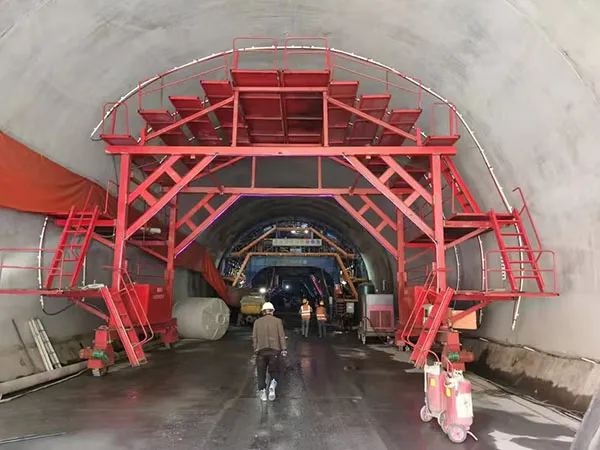
Tunnel lining trolleys, also known as tunnel formwork systems or tunnel shuttering machines, are essential equipment used for in-situ concrete lining in tunnel construction. Depending on tunnel structure, size, and construction methods, tunnel lining trolleys can be classified into several types. These are large, mobile structures used inside tunnels to support the formwork for cast-in-place concrete linings or to install precast concrete segments.

Tunnel Lining Trolley Type

Tunnel lining trolleys

The primary categorization is based on the type of lining they are designed for:

Formwork Trolleys (for Cast-in-Place Concrete Lining):

These trolleys carry large sections of steel formwork. They position the formwork against the excavated tunnel profile, concrete is pumped behind it, and once the concrete cures sufficiently, the trolley lowers (strips) the formwork and moves forward (travels) to the next section.

Sub-types based on Formwork Configuration:

Full-Round Formwork Trolley: Carries formwork for the entire tunnel cross-section (invert, walls, and arch) allowing for a single pour. Complex and heavy, often used for circular or near-circular tunnels.

Arch (or Crown/Sidewall) Formwork Trolley: Carries formwork only for the upper arch and sidewall sections. This is used when the invert (floor) is cast separately first (often using simpler screeding or a dedicated invert form). This is very common for horseshoe or D-shaped tunnels.

Invert Formwork Trolley: Specifically designed to carry the formwork for casting the tunnel floor (invert). Often used in conjunction with an Arch Formwork Trolley.

Telescopic Formwork Trolley: The formwork sections are designed to retract inwards (like a telescope) after stripping. This allows the entire trolley to move forward through the previously cast lining section without needing extensive dismantling. This is the most common type for longer tunnels due to efficiency.

Non-Telescopic (Collapsible) Formwork Trolley: Sections may hinge or collapse, but might not fully telescope. Movement might require more clearance or partial dismantling. Less common for continuous tunnel drives.

Portal Formwork: While not strictly a “trolley” in the travelling sense, specialized formwork systems are used at the tunnel entrances/exits (portals).

Tunnel lining trolleys

Segment Erector Trolleys (for Precast Concrete Segments):

These are used primarily in tunnels excavated by Tunnel Boring Machines (TBMs), although variations exist for conventional tunnels installing precast linings.

Their main function is to pick up precast concrete segments (delivered usually by multi-service vehicles or segment cars), rotate them to the correct orientation, and precisely place them to form a complete ring against the TBM’s shield or the previously installed ring.

More detailed information about tunnel lining trolley types can be found at: https://www.gf-bridge-tunnel.com/a/blog/tunnel-lining-trolleys-type.html

How to Prevent Corrosion in Steel Strcture

To prevent corrosion in steel structures, a multi-faceted approach is essential, addressing design, material selection, surface preparation, and protective coatings.

How to Prevent Corrosion in Steel Strcture

steel structures

Design Considerations

Minimize Moisture Traps: Design details should prevent water accumulation and allow for drainage. Inclined surfaces, drainage holes, and avoiding sharp edges can help.

Ensure Adequate Ventilation: Promote air circulation around the steel structure to reduce humidity and the time of wetness. Seal box sections unless they are to be galvanized, in which case provide vent and drain holes.

Avoid Contact with Dissimilar Materials: Prevent or insulate contact between different metals (bimetallic connections) to avoid galvanic corrosion. Similarly, separate steel from timber using coatings or plastic sheets. Ensure proper concrete cover and quality to protect embedded steel.

Facilitate Coating Application and Maintenance: Design for easy access for applying and inspecting protective coatings.

Material Selection

Choose Appropriate Steel Grades: Consider using weathering steel (which forms a protective rust layer), stainless steel (for high corrosion resistance), or pre-coated steels like galvanized steel, galvalume steel, or pre-painted steel, depending on the environment.

Consider the Environment: Select materials and protection systems based on the corrosivity of the environment (e.g., coastal, industrial, or interior).

Surface Preparation

Thorough Cleaning: Before applying any protective coating, the steel surface must be clean and free of rust, mill scale, oil, grease, and other contaminants.

Methods include abrasive blast cleaning, power tool cleaning, and chemical cleaning (acid pickling). The chosen method depends on the initial condition of the steel and the requirements of the coating system.

Create a Suitable Surface Profile: Some coatings require a specific surface roughness (anchor profile) to ensure proper adhesion. Blast cleaning with angular abrasives creates this profile.

steel structures

Protective Coatings

Paint Systems: Applying multi-layer paint systems is a common method. These typically include a primer (often zinc-rich for cathodic protection or epoxy-based for adhesion and corrosion inhibition), an intermediate coat (to build thickness), and a topcoat (for weather resistance and aesthetics).

Metallic Coatings:

Hot-Dip Galvanizing: Immersing steel in molten zinc creates a robust, corrosion-resistant alloy layer bonded to the steel.

For more detailed information on how to prevent corrosion of steel structures, please visit: https://www.meichensteel.com/a/news/how-to-prevent-corrosion-in-steel-strcture.html

How to Repair Weld Cracks in Steel Structures

Repairing weld cracks in steel structures is a critical task that requires careful planning, execution, and inspection to ensure the structural integrity is restored and the crack doesn’t return. This is a job for critical structures and should ALWAYS be performed by qualified welders following approved procedures under the supervision of experienced engineers or inspectors.

Repairing Cracks in Steel Structure Welds

steel structures

1. Assessment and Planning:

Safety First: Implement all necessary safety precautions. This includes proper PPE (welding mask, gloves, leathers, respirator if needed), fire watch, ventilation, hot work permits, lockout/tagout procedures if near machinery, and securing the area.

Identify the Crack: Locate the crack precisely. Determine its full extent (length, depth, and whether it extends through the thickness). Non-Destructive Testing (NDT) methods like Magnetic Particle Testing (MT), Liquid Penetrant Testing (PT), or Ultrasonic Testing (UT) are often essential to find the crack tips accurately.

Determine the Cause (Crucial!): This is the MOST important step to prevent recurrence. Why did the crack form?

Fatigue: Cyclic loading leading to crack initiation and propagation.

High Residual Stress: From the original welding or fabrication process.

Hydrogen Embrittlement: Hydrogen trapped in the weld/Heat Affected Zone (HAZ). Often causes delayed cracking (hours or days after welding).

Poor Weld Quality: Lack of fusion, lack of penetration, porosity, slag inclusions acting as stress risers.

Incorrect Weld Procedure: Wrong consumables, incorrect preheat/interpass temperature, wrong parameters.

Poor Joint Design: Creates stress concentrations.

Overload: The structure was subjected to loads beyond its design capacity.

Base Metal Defects: Laminations or inclusions in the steel itself.

Consult Codes and Standards: Refer to relevant welding codes (e.g., AWS D1.1 Structural Welding Code – Steel, Eurocode 3, etc.) and project specifications for requirements regarding crack repair.

Develop a Repair Procedure: Based on the cause, material type, thickness, location, and code requirements, a detailed Welding Procedure Specification (WPS) for the repair must be developed or selected. This specifies:

Method of crack removal.

Joint preparation details.

Welding process (SMAW, FCAW, GMAW, SAW).

Filler metal type and size.

Preheat requirements.

Interpass temperature control.

Post-Weld Heat Treatment (PWHT) if required.

NDT requirements before, during, and after repair.

Qualified Personnel: Ensure the welders performing the repair are qualified according to the specific WPS and relevant codes. Ensure qualified NDT technicians and inspectors are involved.

2. Repair Execution:

steel structures

Crack Removal: The entire crack, including its tips, must be completely removed. This is typically done by:

Gouging: Air Carbon Arc Gouging (CAC-A) is common and efficient but requires care not to introduce excessive carbon into the base metal (usually followed by grinding). Plasma Arc Gouging (PAG) is another option.

Grinding: Using abrasive wheels. More controlled but slower, suitable for smaller cracks or finishing after gouging.

For more detailed information on how to repair steel structure welding cracks, please click here: https://www.meichensteel.com/a/news/repairing-cracks-in-steel-structure-welds.html

How to Custom Design Steel Building Frames

Designing steel building frames is a complex engineering task that requires specialized knowledge of structural mechanics, material science, relevant building codes, and analysis software. This process MUST be performed by a qualified and licensed Structural Engineer. This guide provides an overview of the steps involved, not a substitute for professional engineering services.

Customized Steel Building Frames

Steel Building Frames

Phase 1: Project Definition & Conceptualization

Define Project Requirements & Scope:

Building Use & Occupancy: What is the building for (office, warehouse, manufacturing, retail, residential)? This determines live loads, code requirements, and potentially specific functional needs (e.g., crane loads).

Dimensions & Geometry: Length, width, clear height, roof slope, overall shape. Are there mezzanines, specific column-free spans required?

Location: Crucial for determining environmental loads (wind speed, snow load, seismic zone). Also impacts local building codes and foundation design.

Architectural Requirements: Integration with the architectural design, desired aesthetics, cladding type (influences girt/purlin spacing and loads), locations of doors, windows, and other openings.

MEP Integration: Requirements for HVAC, plumbing, electrical systems – routing, openings, equipment weight.

Budget & Schedule: Constraints that influence design choices (material efficiency, complexity).

Select Structural System & Conceptual Layout:

Based on requirements, choose the primary framing type:

Portal Frames (Rigid Frames): Common for warehouses, industrial buildings. Efficient for clear spans. Connections are typically moment-resisting.

Braced Frames: Uses diagonal bracing (tension/compression or tension-only) to resist lateral loads. Columns primarily take axial load, beams take gravity loads. Connections can often be simpler (pinned/shear).

Moment-Resisting Frames: Relies on rigid connections between beams and columns to resist lateral loads. Often used in multi-story buildings where bracing isn’t desired architecturally.

Trusses: Efficient for long spans, especially roofs. Composed of smaller members arranged in triangles.

Develop Preliminary Layout: Determine bay spacing (distance between frames), frame spacing (along the building length), column locations, and bracing locations (if applicable). Consider efficiency, architectural constraints, and load paths.

Steel Building Frames

Phase 2: Load Determination & Analysis

Determine Loads (Code Compliance is Mandatory):

Identify and quantify all applicable loads based on relevant building codes (e.g., ASCE 7 in the US, Eurocodes in Europe, National Building Code of Canada).

More details on how to custom design steel building frames can be found at: https://www.meichensteel.com/a/news/customized-steel-building-frames.html

What is the steel structure construction process?

Steel structure construction is a widely adopted method in modern architecture and engineering due to its strength, durability, and efficiency. From high-rise buildings and industrial warehouses to bridges and stadiums, steel provides a versatile solution for a wide range of construction needs.

The steel structure construction process involves a series of systematic steps that ensure the structural integrity and safety of the final build. These steps typically include planning and design, material procurement, fabrication, transportation, site preparation, and on-site erection. Each phase plays a crucial role in transforming raw steel components into a fully functional, load-bearing framework.

Steel structure construction process

Steel structure

Phase 1: Planning and Design

Conceptual Design & Feasibility: The client, architect, and engineers define the project requirements, budget, and overall building concept. Initial studies determine if a steel structure is the most suitable option.

Structural Engineering & Analysis: Structural engineers perform detailed calculations to determine loads (dead load, live load, wind, seismic, etc.) and design the steel frame. This includes selecting appropriate steel grades, member sizes (beams, columns), connection types (bolted, welded), and bracing systems for stability.

Detailed Drawings & Specifications: Architects and engineers produce detailed construction drawings (plans, elevations, sections, connection details) and technical specifications. These documents outline exactly how the structure should be built, the materials to use, and the quality standards required.

Shop Drawings: The steel fabricator (selected later) will create highly detailed shop drawings based on the engineering drawings. These drawings specify exact dimensions, cuts, hole locations, weld types, bolt types, surface finishes, and assembly marks for each individual steel member. These must be reviewed and approved by the structural engineer before fabrication begins.

Erection Plan: Often developed collaboratively between the engineer, fabricator, and erector, this plan outlines the sequence of lifting and assembling the steel members on site, crane locations, safety procedures, and temporary bracing requirements.

Phase 2: Fabrication (Off-Site)

This happens in a controlled factory environment (the fabrication shop):

Material Procurement: The fabricator orders the required raw steel shapes (I-beams, W-sections, channels, angles, plates, hollow sections) from steel mills based on the approved shop drawings and material specifications.

Cutting & Shaping: Steel members are cut to precise lengths using saws, shears, or thermal cutting (plasma, oxy-fuel).

Drilling/Punching: Holes for bolts are accurately drilled or punched according to the shop drawings.

Fitting & Welding: Components (e.g., base plates, connection plates, stiffeners) are fitted together and welded as specified in the shop drawings. Skilled, certified welders perform this work.

Surface Treatment: Steel members are cleaned (usually by shot blasting) to remove mill scale and rust. Then, a primer paint or other specified coating (like galvanizing) is applied for corrosion protection.

Quality Control (QC): Throughout fabrication, QC checks are performed (dimensional checks, weld inspection using visual or non-destructive testing methods like UT/MT/PT, coating thickness checks).

Marking & Labeling: Each finished piece is clearly marked with an identification number/code corresponding to the shop drawings and erection plan, ensuring it can be easily identified on site.

Phase 3: Transportation

Loading & Logistics: Fabricated steel members are carefully loaded onto trucks or trailers in a sequence that often aligns with the planned erection sequence on site.

Shipping: Steel is transported from the fabrication shop to the construction site. Special permits and escorts may be required for oversized loads.

Steel structure

Phase 4: Site Preparation

This happens concurrently with or before fabrication/transportation:

Foundation Construction: Concrete foundations (footings, pile caps, raft foundations) are constructed based on the engineering design. Crucially, anchor bolts are accurately embedded into the concrete where steel columns will be placed. Their position and elevation are critical.

Site Logistics: The site is prepared with clear access roads, designated laydown areas for storing steel deliveries, and stable pads for crane setup.

Phase 5: Erection (On-Site Assembly)

This is the process of assembling the steel frame on site:

Receiving & Sorting: Steel deliveries are received, checked against delivery tickets, and sorted in the laydown area according to their erection marks and the erection plan.

Crane Setup: Mobile or tower cranes capable of lifting the heaviest steel members are positioned strategically on site.

For more detailed information about the steel structure construction process, please click here: https://www.meichensteel.com/a/news/steel-structure-construction-process.html