
Repairing Tunnel Concrete Lining with Specialized Secondary Formwork: Ensuring Structural Integrity and Efficiency
Tunnels play a critical role in modern infrastructure, whether they serve as transportation corridors, utility passages, or water conveyance systems. The concrete lining of a tunnel, acting as both a structural shell and a protective layer, is subjected to immense stresses over time. Factors such as ground movement, water infiltration, chemical reactions, and construction imperfections can cause deterioration in tunnel linings. When such defects occur, timely repair is not only essential for maintaining safety but also for extending the operational lifespan of the tunnel.
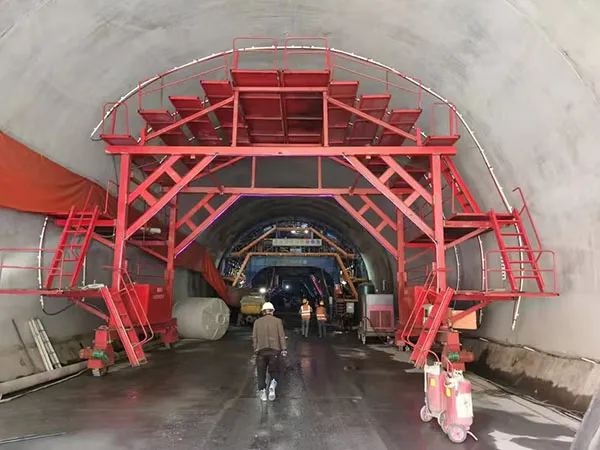
One of the most effective methods for repairing damaged tunnel linings is the use of specialized secondary formwork, which enables engineers and construction teams to restore structural integrity while maintaining precise geometrical control. Unlike traditional repair methods that may rely on hand-applied concrete or temporary scaffolding, secondary formwork provides a tailored, modular solution that can adapt to the curvature and dimensions of the tunnel.
Repairing Tunnel Concrete Lining with Specialized Secondary Formwork
Understanding the Causes of Tunnel Lining Damage
Before discussing repair strategies, it is crucial to identify why tunnel concrete linings degrade. Common causes include:
Mechanical Stress and Ground Movement: Tunnels are embedded in dynamic geological environments. Settlement, seismic activity, or unexpected ground pressure can create cracks or spalling in the concrete lining.
Water Infiltration and Corrosion: Water penetrating through cracks or joints can reach reinforcement bars, accelerating corrosion and weakening structural performance.
Chemical Attack: In some tunnels, groundwater or transported materials may contain sulfates, chlorides, or acidic components, which react with the concrete and reduce durability.
Construction Deficiencies: Inadequate compaction, poor curing, or deviations in original formwork can result in voids, honeycombing, or surface irregularities, which manifest as long-term maintenance challenges.
Addressing these issues requires a repair strategy that ensures the repaired segment can withstand mechanical loads, prevent water ingress, and integrate seamlessly with the existing structure. This is where specialized secondary formwork proves invaluable.
Advantages of Using Specialized Secondary Formwork in Tunnel Repairs
Secondary formwork refers to custom-designed molds that are installed after the initial tunnel lining has been constructed. Unlike standard primary formwork, which shapes the initial concrete pour, secondary formwork allows for highly localized repair with precision. The benefits include:
…
For more detailed information on using specialized secondary formwork to repair tunnel concrete lining, please click to visit: https://www.gf-bridge-tunnel.com/a/blog/repairing-tunnel-concrete-lining-with-specialized-secondary-formwork.html

