
Ensuring Workplace Safety: Advanced Risk Control Strategies for Large-Scale Head and Tailstock Positioners
In heavy-duty fabrication workshops, particularly those involved in structural steel manufacturing, pressure vessel production, and large-scale welding assemblies, head and tailstock welding positioners are not just auxiliary equipment—they are central to operational efficiency. These systems enable controlled rotation and precise positioning of oversized workpieces, allowing operators to maintain optimal welding angles and machining accuracy. However, while they significantly improve productivity, they also introduce a layer of risk that cannot be overlooked.
Safety Precautions for Operating Large Head-and-Tail Frame Positioners
For many manufacturers, safety challenges do not arise from lack of awareness, but from inconsistent execution of safety procedures in high-pressure production environments. Therefore, implementing a structured, experience-driven safety framework is no longer optional—it is a necessity for sustainable operations.
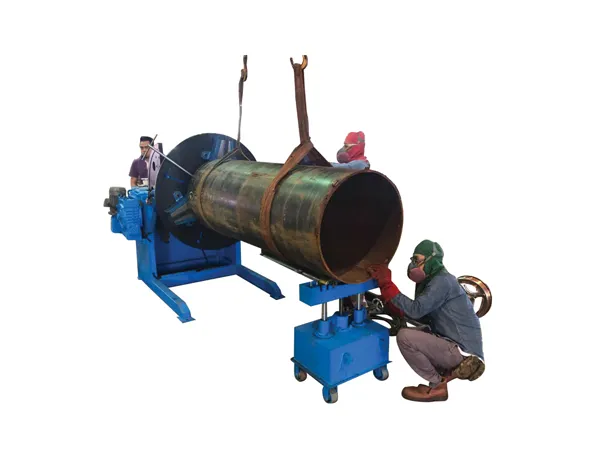
Understanding the Real Risks Behind Large-Scale Positioners
Unlike smaller positioning devices, large-scale head and tailstock systems operate under extreme loads and torque conditions. A single misstep can result in serious consequences. The most common hazards observed in real industrial environments include:
Uncontrolled rotational inertia when handling asymmetrical or improperly balanced workpieces
Mechanical slippage caused by insufficient clamping force or worn fixtures
Pinch and crush points between rotating components and fixed structures
Electrical system failures, especially in older or poorly maintained equipment
Hydraulic or servo malfunction, leading to sudden and unexpected movement
From a practical standpoint, these risks are often compounded by human factors such as fatigue, inadequate communication, or over-reliance on automation systems.
Pre-Operation Safety: Where Most Accidents Can Be Prevented
Operator Competency Beyond Basic Training
It is not enough for operators to simply “know how to use” the equipment. In high-load applications, operators must understand:
Load distribution principles
Equipment torque limits
Emergency response timing
System feedback signals (noise, vibration, resistance changes)
Experienced operators often identify potential failures before they occur—not through alarms, but through subtle changes in machine behavior. This level of awareness should be cultivated through continuous training, not one-time certification.
…
For more detailed information on advanced risk control strategies for large spindles and tailstock positioners, please click to visit: https://www.bota-weld.com/en/a/news/safety-precautions-for-operating-large-head-and-tail-frame-positioners.html

