
Traditional Methods vs. Modern Secondary Lining Trolley: Revolutionizing Tunnel Construction
In the realm of tunnel construction and underground infrastructure, every decision affects safety, efficiency, and long-term durability. Among the most critical stages is secondary lining, the process of applying an additional concrete layer to reinforce tunnel structures. Traditionally dominated by manual labor, this stage has seen a dramatic transformation with the introduction of modern secondary lining trolleys. In this article, we explore the differences between conventional methods and these advanced trolleys, highlighting why many companies are embracing the shift.
Traditional Methods vs. Modern Secondary Lining Trolley
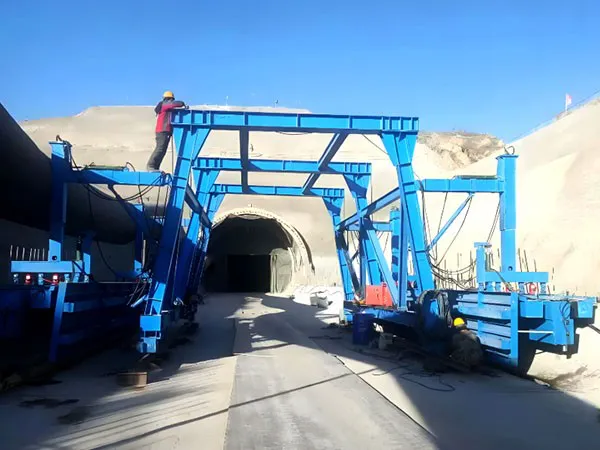
1. Traditional Secondary Lining Methods: Strengths and Limitations
For decades, secondary lining relied heavily on manual labor and basic mechanical tools. Workers would install wooden or steel formwork, pour concrete by hand, and perform curing and finishing tasks using scaffolding or small movable platforms. While dependable, this approach presents notable challenges:
Labor-Intensive Operations: Large teams are necessary to handle formwork, concrete placement, and finishing. This not only increases labor costs but also exposes workers to fatigue-related mistakes.
Time-Consuming Processes: Each stage—setup, concrete pouring, curing, and finishing—requires careful attention, often slowing overall project timelines.
Safety Concerns: Working at height on scaffolding while handling heavy materials significantly raises the risk of accidents.
Inconsistent Quality: Achieving a uniform lining thickness and smooth surface relies heavily on the skill of workers. Variability can affect durability and structural performance.
…
For more detailed information on the differences between traditional methods and modern secondary lining trolleys, please click to visit: https://www.gf-bridge-tunnel.com/a/blog/traditional-methods-vs-modern-secondary-lining-trolley.html


