
Common Mistakes When Installing Thin-Section Bearings and How to Avoid
Thin-section bearings are critical components in applications where space is limited and weight reduction is paramount, such as robotics, medical devices, and aerospace equipment. However, their delicate cross-section makes them especially vulnerable to installation errors that can lead to premature failure, excessive noise, or even catastrophic breakdown. Understanding the most frequent mistakes and knowing how to prevent them is essential for maintaining performance and extending service life. In this guide, we draw on decades of engineering experience at BIBO Bearing to highlight five common pitfalls and provide clear, actionable solutions to ensure your thin-section bearings deliver their full potential.
1. Using Improper Mounting Tools and Methods
One of the most prevalent installation errors is applying force directly to the bearing in a misguided attempt to seat it quickly. Thin-section bearings are not designed to withstand concentrated impact or uneven pressure.
Mistake: Hammering Directly on the Bearing
Striking the outer ring with a hammer or using a punch against the raceway can cause brinelling (indentations) on the raceways, distort the thin rings, or crack the hardened steel. Even a small dent can generate vibration and noise during operation.
Mistake: Uneven Force Application
Pressing only on one side of the bearing cocking the ring inside the housing or on the shaft. This leads to misalignment, increased friction, and accelerated wear.
Best Practice: Use an arbor press or a dedicated bearing installation tool that applies force evenly to the ring being fitted. For press fits, always support the ring that takes the load — never transmit force through the rolling elements. BIBO Bearing recommends using calibrated mounting sleeves and checking alignment with a dial indicator during installation.
2. Neglecting Cleanliness and Environmental Control
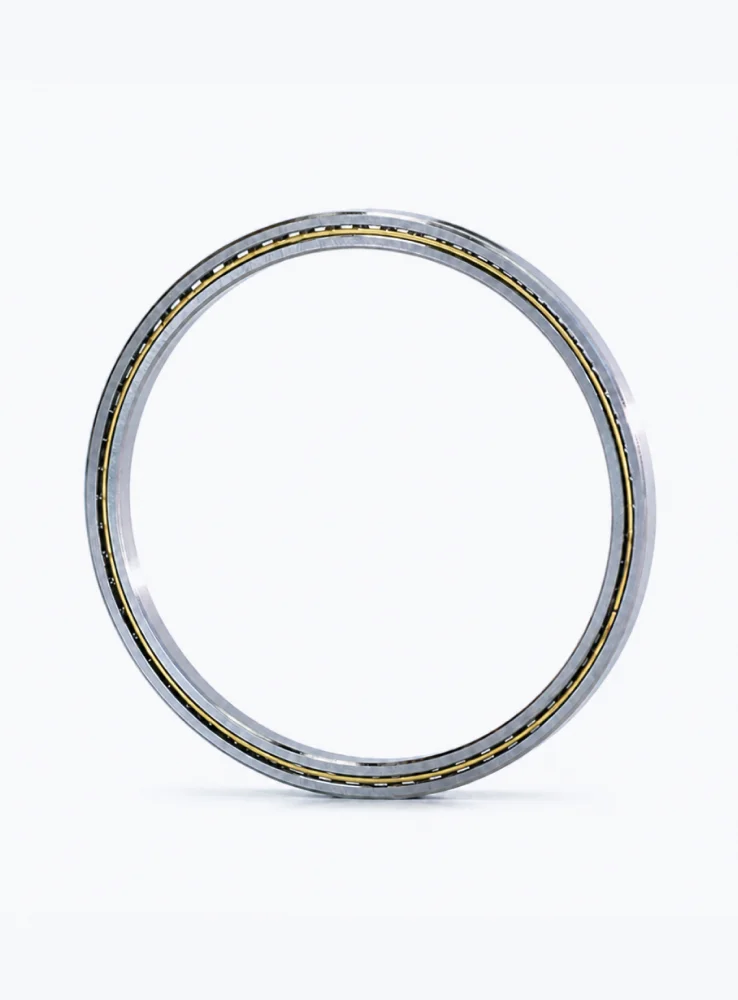
Thin-section bearings have smaller internal clearances and are more sensitive to contamination than standard bearings. Even microscopic debris can cause high spots, noise, or jamming.
Mistake: Installing in Dirty or Humid Conditions
Dust, metal chips, or moisture from the workshop can enter the bearing during mounting. Once inside, particles act as grinding agents, quickly destroying the raceway finish.
Mistake: Handling Bearings with Bare Hands
Natural skin oils can corrode steel, and moisture can lead to early rust. For stainless steel or hybrid bearings, fingerprints might not cause rust but can attract dirt.
Best Practice: Always work in a clean, dry area. Wear lint-free gloves. Unpack thin-section bearings only immediately before installation. If the environment is dusty, use a temporary enclosure. BIBO Bearing supplies bearings in sealed packaging with desiccants — keep them sealed until the last moment.
…
For more detailed information on common mistakes when installing thin-section bearings and how to avoid them, please click here: https://www.bobibearing.com/a/bearing-knowledge/thin-bearing-mistakes.html


