
Multi-Story Steel Structure Warehouse for Logistics Hubs: Transforming Modern Supply Chains
In today’s rapidly evolving supply chain environment, logistics hubs face increasing pressure to optimize space utilization, reduce operational costs, and accelerate delivery efficiency. Traditional single-story warehouses often fall short when addressing these challenges, especially in urban areas where land availability is limited and expensive. This is where multi-story steel structure warehouses for logistics hubs have emerged as a game-changing solution, offering unmatched flexibility, durability, and scalability.
Steel structures have long been recognized for their strength, adaptability, and longevity, making them ideal for industrial construction. A multi-story warehouse built with steel offers several advantages over conventional concrete or brick-and-mortar facilities. Firstly, steel’s high strength-to-weight ratio allows for taller structures without compromising stability. This means logistics hubs can expand vertically, creating additional storage floors without the need for acquiring more land. For cities where real estate costs are escalating, this vertical expansion is not merely beneficial—it is essential.
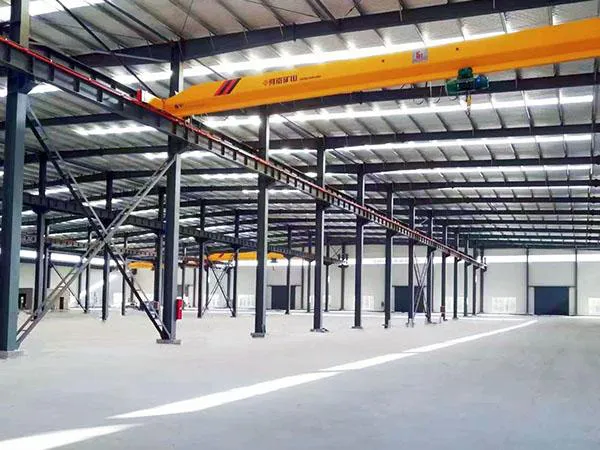
One of the core benefits of multi-story steel structure warehouses is their rapid construction timeline. Unlike traditional buildings that require months or even years to complete, steel frameworks can be prefabricated offsite and assembled onsite with remarkable speed. This minimizes disruption to existing operations and allows logistics hubs to scale up capacity in line with market demand. The prefabrication process also ensures higher construction precision, reducing material waste and on-site labor costs, which is critical for logistics companies aiming to optimize their capital expenditure.
Safety and durability are paramount considerations in modern warehouse design. Steel structures are inherently resistant to fire, pests, and extreme weather conditions, which significantly lowers the risks of operational downtime due to structural damage. Moreover, modern design techniques allow engineers to incorporate earthquake-resistant features and reinforced flooring capable of supporting heavy-duty logistics equipment such as automated pallet shuttles and high-capacity forklifts. By adopting multi-story steel structure warehouses, logistics hubs not only secure their assets but also ensure a safer working environment for their staff.
Operational efficiency within these multi-story warehouses is another key advantage. Vertical storage solutions can be seamlessly integrated with advanced automation systems, including conveyor belts, robotic picking systems, and automated guided vehicles (AGVs). This integration enables faster inventory movement between floors, reduces manual labor, and optimizes the overall supply chain flow. Additionally, the open column-free interior spaces commonly associated with steel structures facilitate flexible layout planning, allowing logistics managers to reconfigure storage racks, loading bays, and sorting areas according to seasonal demand or product type.
…
For more information about multi-story steel structure warehouses supporting logistics hubs, please click to visit: https://www.meichensteel.com/a/procurement-guides/multi-story-steel-structure-warehouse-for-logistics-hubs.html


