
What Engineers Should Know About Thin-Section Bearing Load Capacity
When space and weight constraints drive design, thin-section bearings become the engineer’s first choice for compact rotary systems. However, their reduced cross-section directly impacts load capacity in ways that differ significantly from standard bearings. Misjudging these limits leads to premature failure, excessive deflection, or costly redesigns. This article covers the essential knowledge every engineer needs—from load type definitions to material and geometry effects—so you can confidently select the right thin-section bearing for your application. As a specialist in precision thin-section bearings, BIBO Bearing provides engineering support and custom solutions to match your specific load demands.
Understanding Load Capacity in Thin-Section Bearings
Load capacity in a thin-section bearing refers to the maximum load it can sustain under defined operating conditions without permanent deformation or fatigue failure. Unlike standard bearings, where larger cross-sections provide generous safety margins, thin-section bearings maintain a small radial and axial cross-section (typically 1/8” to 1” square) while offering bore diameters from 1” to over 40”. This geometry creates unique load‑handling characteristics that engineers must analyze carefully.
The two primary categories are static load capacity (the maximum load the bearing can endure while stationary) and dynamic load capacity (the load under which the bearing achieves a rated fatigue life). Both are further divided into radial and axial directions. Because thin-section bearings have fewer rolling elements and smaller raceway contact areas, their load ratings are often lower than those of equivalent‑bore standard bearings. The key is to match the load profile of your application—whether constant, oscillating, or shock loads—to the bearing’s published ratings.
Radial vs. Axial Load: The Thin-Section Difference
In a deep‑groove thin-section bearing, radial load capacity is typically higher than axial load capacity for a given bore size. However, because the raceway depth is shallow, axial loads can cause edge loading if not properly aligned. Engineers should also consider combined loads—when both radial and axial forces act simultaneously. The bearing’s contact angle and internal clearance become critical. For pure axial loads, four‑point contact thin-section bearings are often preferred because they can handle bidirectional thrust with a single bearing row.
Key Factors That Influence Load Capacity
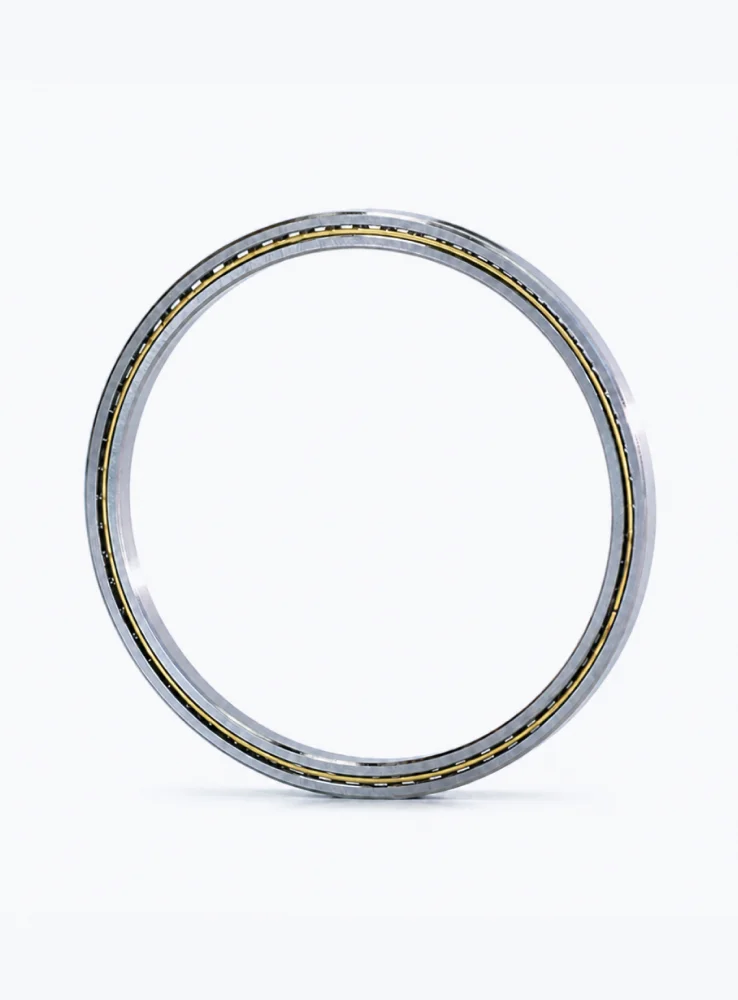
Several interrelated factors determine how much load a thin-section bearing can reliably handle. Understanding each helps engineers avoid undersizing or oversizing—two mistakes that inflate cost or risk reliability.
…
For more detailed information on the load-carrying capacity of thin-section bearings that engineers should know, please click to visit: https://www.bobibearing.com/a/bearing-knowledge/bearing-load-capacity.html


