Comprehensive Analysis of Slewing Bearings: Classification, Selection, and Application Guide

In modern industrial equipment, slewing bearings are core components for achieving rotary motion, widely used in cranes, wind turbines, steel structure rotary tables, and tunnel boring machines. They can withstand not only large radial loads but also axial forces and overturning moments, directly affecting the safety and efficiency of the equipment. This article will systematically analyze the classification and selection points of slewing bearings to assist in engineering practice.

Main Classifications of Slewing Bearings

Slewing Bearings

Slewing bearings can be classified according to the type of rolling elements, structural form, and installation method. Different types of bearings are suitable for different engineering needs and load conditions.

1. Classification by Rolling Element Type

Spherical Slewing Bearings: Use steel balls as rolling elements, resulting in low frictional resistance and flexible operation, suitable for light to medium load scenarios.

Typical Applications: Industrial robots, light lifting machinery, etc.

Roller Slewing Bearings: Use cylindrical rollers, tapered rollers, or crossed rollers, offering high load-bearing capacity, particularly suitable for bearing radial forces and overturning moments.

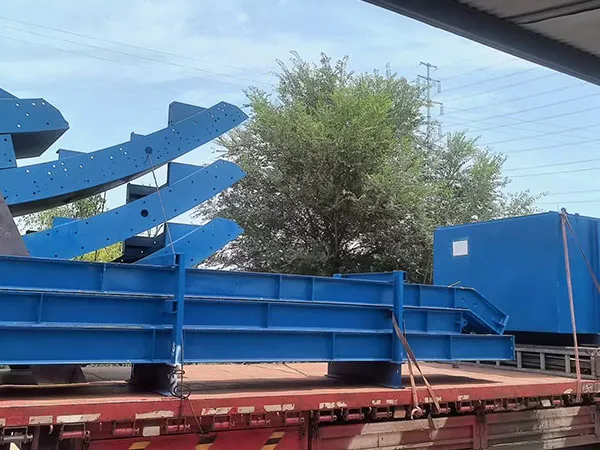
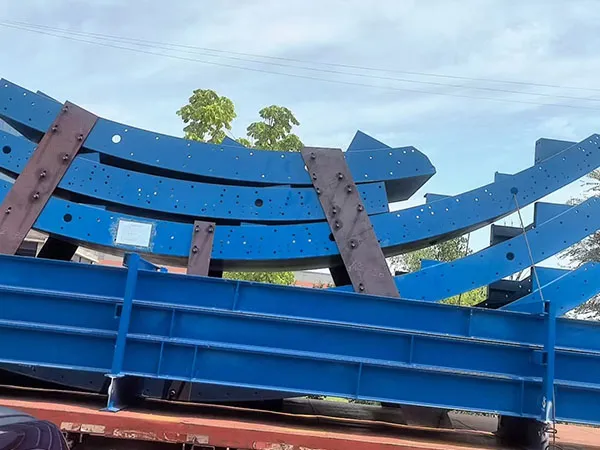
Typical Applications: Tower cranes, tunnel boring machines, steel structure rotary tables.

2. Classification by Structural Form

Single-row slewing bearings: Compact structure, moderate load-bearing capacity, suitable for small and medium-sized machinery.

Double-row slewing bearings: Rolling elements are arranged in two rows, increasing load-bearing capacity, suitable for medium and large-sized machinery.

Four-point contact slewing bearings: A single row of steel balls can withstand both positive and negative axial loads and radial forces, widely used in engineering machinery.

3. Classification by Installation Method

Internal gear slewing bearings: Gear ring is on the inner ring, commonly used in turntables, rotary worktables, etc.

External gear slewing bearings: Gear ring is on the outer ring, suitable for gear-driven equipment.

Gearless slewing bearings: Rotation is achieved through hydraulic or direct drive, mostly used in high-precision machinery.

Slewing Bearing Selection Guide

Slewing Bearings

Choosing the right slewing bearing not only ensures stable equipment operation but also reduces maintenance costs and extends service life. The following factors should be considered when selecting slewing bearings:

Load Type and Size

Small, light-load equipment can use ball bearings.

Medium-to-large equipment with high load-bearing requirements should use roller bearings or crossed roller bearings.

For more detailed information on slewing bearing classifications, please click to visit: https://www.mcslewingbearings.com/a/news/slewing-bearing-classification.html

How to Maintain a Slewing Bearing? A Comprehensive Analysis of Maintenance Methods and Practical Tips

Slewing bearings (also known as slewing supports) are crucial rotating components in large machinery, widely used in cranes, excavators, construction machinery, wind power equipment, robots, metallurgical equipment, and automated production lines.

Due to their ability to withstand heavy loads and impact loads while maintaining precise rotation, proper daily maintenance not only extends the service life of slewing bearings but also effectively reduces failure rates and improves overall equipment operating efficiency.

This article will comprehensively analyze slewing bearing maintenance methods, lubrication techniques, and usage precautions based on actual working conditions, helping companies to perform equipment maintenance more scientifically.

Why is routine maintenance of slewing bearings crucial?

Slewing bearings are exposed to various factors during long-term operation, including dust, moisture, corrosion, load impact, and poor lubrication. If maintenance is not timely or standardized, it can easily lead to:

Increased operating noise

Slewing jamming or instability

Accelerated raceway wear

Decreased load-bearing capacity

Frequent malfunctions, impacting production

Significantly shortened service life

Establishing a standardized routine maintenance system is an effective means to ensure stable equipment operation and reduce downtime.

Routine Maintenance Methods for Slewing Bearings

Slewing bearings

Regular inspection and cleaning are fundamental.

Regularly observe the operating status and appearance of the slewing bearing, focusing on:

Abnormal wear or cracks

Lubricant leakage

Smooth rotation and any unusual noises

Loose mounting bolts

During daily cleaning, use a clean brush or compressed air to remove dust and impurities, preventing foreign objects from entering the raceway and affecting rotational accuracy.

Lubrication Maintenance

1. Rolling Element Raceway Lubrication

Lubricant Selection:

High-quality, heavy-duty, extreme-pressure lithium-based grease is typically required.

The manufacturer’s recommended model and specifications should be strictly followed. Special operating environments (such as high temperature, high humidity, or extreme cold) may require specialized greases.

For more detailed information on how to maintain slewing bearings, please click to visit: https://www.mcslewingbearings.com/a/news/slewing-bearing-maintenance-methods.html

A Comprehensive Analysis of the Causes and Prevention of Slewing Bearing Tooth Breakage: Improving Equipment Stability and Lifespan

Slewing bearings are core rotating components in construction machinery, lifting equipment, wind turbine generators, and large machine tools, and their performance directly affects equipment safety and production efficiency. However, tooth breakage is a frequent problem after long-term use, leading not only to equipment downtime but also potentially high maintenance costs. So, why do slewing bearings break teeth? And how can this be prevented scientifically? This article will provide a systematic analysis.

Main Causes of Slewing Bearing Tooth Breakage

Slewing bearings

1. Overload Operation

Slewing bearings are designed with a rated load range. Overloading causes stress concentration on the tooth surface, accelerating material fatigue and ultimately leading to tooth breakage. This is especially true in cranes or large excavators, where improper operation poses a very high risk of overloading.

2. Improper Lubrication

Insufficient lubrication or low-quality lubricating oil leads to direct metal-to-metal contact between the tooth surfaces, increased friction, localized temperature increases, and rapid gear wear. Neglecting lubrication maintenance over a long period is a major cause of tooth breakage.

3. Installation and Adjustment Issues

The installation accuracy of the slewing bearing directly affects the gear meshing state. Uneven installation or preload can lead to uneven gear stress and excessive localized stress, easily causing tooth surface damage or even tooth breakage.

4. Material and Heat Treatment Defects

Inadequate strength, hardness, and surface treatment of gear steel can easily cause micro-cracks under high stress environments, eventually leading to tooth breakage due to long-term accumulation. Uneven carburizing or insufficient quenching are also common hidden dangers.

5. Harsh Operating Environment

High temperatures, dust, and corrosive media can accelerate tooth surface wear or corrosion, reduce load-bearing capacity, and increase the risk of tooth breakage.

Scientific Prevention Measures for Slewing Bearing Tooth Breakage

Slewing bearings

1. Strict Load Control

Ensure equipment operates within its design load range and avoid frequent overloading. For high-load machinery, slewing bearings with higher rated loads can be selected to increase safety margins.

2. Optimize Lubrication Scheme

Use lubricating grease that meets specifications and regularly check the oil level and quality to ensure adequate lubrication of the tooth surface. For heavy-duty or high-speed operating equipment, consider a circulating lubrication system to improve tooth surface protection.

For more detailed information on the causes and prevention of slewing bearing tooth fracture, please click to visit: https://www.mcslewingbearings.com/a/news/causes-and-preventive-measures-for-broken-teeth-in-slewing-bearings.html

Tunnel Lining Construction Process Explained: Methods, Materials & Best Practices

Tunnel lining is a critical aspect of underground construction, ensuring structural stability, water tightness, and long-term durability. Understanding the construction process, materials, and best practices can help engineers and project managers mitigate risks and maintain high-quality standards. In this article, we break down the tunnel lining construction process, highlight common challenges, and provide practical solutions to ensure successful project execution.

1. Preparation: Laying the Groundwork for Success

The first step in any tunnel lining project is careful preparation, which sets the foundation for safe and efficient construction. Key activities include:

Site Survey & Geotechnical Investigation: Understanding soil conditions, groundwater levels, and rock types helps in selecting appropriate lining methods and materials.

Design Verification: Confirming structural and hydraulic design parameters to ensure the lining can withstand anticipated loads and pressures.

Equipment & Material Planning: Ensuring timely availability of formwork, concrete, reinforcement, and curing materials to avoid delays.

Tip: Using 3D tunnel modeling software can help visualize lining segments and anticipate complex geometries, reducing errors during construction.

Suggested Image: Site preparation diagram showing bore alignment and excavation zones.

2. Formwork Installation: Building the Framework

Formwork or templates are essential for shaping the tunnel lining. Depending on the project, steel, timber, or modular formwork may be used.

Template Positioning: Proper alignment and anchoring are critical to avoid dimensional errors.

Reinforcement Placement: Steel rebar is installed according to design specifications, ensuring structural strength and crack resistance.

Quality Checks: Prior to pouring concrete, verify correct spacing, alignment, and stability of templates.

Suggested Image: Formwork and reinforcement setup inside an under-construction tunnel.

3. Concrete Casting: Ensuring Durability and Strength

Concrete pouring is the most sensitive phase in tunnel lining construction. Best practices include:

Mix Design Compliance: Use high-performance concrete tailored for tunnel environments, considering compressive strength, workability, and water tightness.

Continuous Pouring: Avoid cold joints by ensuring uninterrupted concrete flow.

Vibration & Compaction: Proper consolidation reduces voids and enhances structural integrity.

Challenges to Watch For:

Segment Collapse: Insufficient support or poor-quality concrete can lead to temporary or permanent collapse.

Leakage: Improper sealing or mix design can cause water infiltration, especially in high groundwater conditions.

Suggested Image: Concrete pouring with vibrating equipment inside a tunnel lining section.

For more detailed information on tunnel lining construction technology, please click to visit: https://www.gf-bridge-tunnel.com/a/blog/tunnel-lining-construction-process-explained.html

Types of Tunnel Lining Systems: How to Choose the Best Solution for Your Tunnel Project

Tunnel construction is one of the most technically demanding tasks in modern infrastructure engineering. From complex geological conditions to strict safety standards and long-term durability requirements, every design decision has a lasting impact on project success.

Among these decisions, selecting the right tunnel lining system is critical. An unsuitable lining solution can lead to structural risks, water leakage, excessive maintenance costs, or even premature failure of the tunnel.

In this guide, we break down the most common types of tunnel lining systems, compare their advantages and limitations, and help you determine which tunnel lining solution best fits your project conditions.

Overview of Common Tunnel Lining Systems

Tunnel lining trolley

1. Initial (Primary) Tunnel Support

Initial support—also referred to as primary or temporary lining—is installed immediately after tunnel excavation. Its primary role is to stabilize the surrounding ground and prevent deformation or collapse during construction.

Typical materials include shotcrete, steel ribs, rock bolts, or timber frames, selected according to ground conditions.

Key advantages:

Provides immediate structural stabilization after excavation

Reduces construction-stage safety risks

Flexible application in varying geological conditions

Limitations:

Not designed for long-term structural performance

Usually requires a secondary lining for durability

Best suited for:

Soft soil, weak rock formations, and tunnels with high deformation risk.

2. Secondary (Permanent) Tunnel Lining

Secondary lining is the final structural layer designed to ensure the tunnel’s long-term strength, durability, and waterproofing performance. It is typically constructed using reinforced concrete, cast-in-place concrete, or fiber-reinforced sprayed concrete.

Key advantages:

High load-bearing capacity and long service life

Excellent water tightness and structural integrity

Customizable geometry for complex tunnel designs

Limitations:

Longer construction time compared to temporary supports

Higher labor and material costs

Best suited for:

Urban tunnels, deep underground tunnels, and projects requiring high durability and waterproofing.

For more detailed information on tunnel lining system types, please click to visit: https://www.gf-bridge-tunnel.com/a/blog/types-of-tunnel-lining-systems.html

How to Choose the Best Tunnel Lining for Metro, Railway and Highway Projects

Tunnel construction is a complex and high-stakes process. Selecting the right tunnel lining is crucial not only for ensuring structural stability but also for minimizing operational risks and long-term maintenance costs. Whether you are working on a metro, railway, highway, or mining tunnel, understanding the requirements for tunnel linings can save time, reduce costs, and most importantly, ensure safety.

Choosing the right tunnel lining for metro, railway, and highway projects is a critical decision in tunnel design, as it directly impacts safety, durability, constructability, and cost. The selection process involves balancing numerous technical and non-technical factors, primarily driven by the ground conditions and the tunnel’s function.

How to Choose the Best Tunnel Lining for Metro, Railway and Highway Projects

Tunnel lining trolley

1. Why the Right Tunnel Lining Choice Is Essential

A tunnel lining acts as the main structural layer that supports surrounding ground pressure, controls deformation, and ensures durability. Incorrect lining selection may result in:

Unexpected cracking or structural failure

Excessive settlement or ground subsidence

Higher maintenance and repair costs

Delays or complete suspension of construction

Serious safety hazards for workers and end-users

In extreme cases, poor lining design can compromise the entire tunnel’s operational safety. This is why tunnel lining selection must be based on geological conditions, load requirements, and long-term durability.

Key Factors to Consider in Tunnel Lining Selection

The decision is complex and requires thorough geotechnical investigation. The main factors can be broadly classified:

A. Geotechnical and Hydrogeological Conditions

This is the most crucial factor, as the ground dictates the required support.

Ground Type and Strength:

Hard Rock: Often allows for thinner linings or even unlined sections where the rock has inherent self-supporting ability (arch action). Initial support may include rock bolts, mesh, and shotcrete.

Soft Ground (Clay, Sand, Silt): Requires immediate and robust support due to low inherent strength and the risk of collapse. This typically necessitates precast concrete segmental linings installed by a Tunnel Boring Machine (TBM).

Squeezing/Swelling Ground: Requires linings that can accommodate or resist high-intensity pressures and deformations.

Groundwater:

High Water Pressure/Flow: Requires a waterproof or highly water-resistant lining system, often involving a two-pass lining (initial support + final lining with a waterproofing membrane) or specialized gaskets and sealing in one-pass segmental linings.

Seismic Activity: Requires linings designed to withstand ground deformations caused by earthquakes.

For more detailed information on tunnel lining selection, please click to visit: https://www.gf-bridge-tunnel.com/a/blog/tunnel-lining-selection.html

Tunnel Secondary Lining Explained: Key to Safety, Durability & Long-Term Performance

Tunnel construction is a highly specialized field where safety, durability, and long-term performance are non-negotiable. While primary supports stabilize the initial excavation, the secondary lining acts as the tunnel’s ultimate protective layer, ensuring reliability for decades. Understanding its importance helps engineers, contractors, and infrastructure planners maximize tunnel lifespan while reducing maintenance costs.

What is Tunnel Secondary Lining?

Tunnel secondary lining is the final structural layer applied after excavation and primary supports (like shotcrete or temporary linings). Unlike the primary lining, which mainly provides temporary stability, secondary lining ensures long-term protection and performance. Key functions include:

Structural Support: Reinforces the tunnel shell against soil movement and seismic activity.

Waterproofing: Prevents leaks that could compromise safety and equipment.

Environmental Resistance: Protects against chemical erosion, abrasion, and temperature fluctuations.

In essence, secondary lining serves as the tunnel’s long-term armor.

 Tunnel Secondary Lining

How Secondary Lining Impacts Tunnel Lifespan

A well-designed secondary lining can extend tunnel life by decades, while poor-quality linings lead to early deterioration. Its benefits include:

Structural Safety

Secondary lining strengthens the tunnel shell, reducing the risk of cracks, deformation, or collapse caused by soil shifts or seismic activity.

Leak Prevention

Water infiltration is a common tunnel problem. Secondary lining combined with waterproof membranes blocks water seepage, protecting electrical systems and reinforcing steel from corrosion.

Durability Against Environmental Stress

High-quality lining materials resist abrasion, chemical exposure, and temperature changes, maintaining performance over time.

Common Risks When Secondary Lining is Neglected

For more detailed information on tunnel secondary lining, please click to visit: https://www.gf-bridge-tunnel.com/a/blog/what-is-tunnel-secondary-lining.html

How Jaw Crushers Improve Efficiency in Stone Crushing Plants

In the stone crushing industry, the jaw crusher plays an irreplaceable role. For sand and gravel plants, ensuring stable product particle size while improving overall capacity and reducing energy consumption and operating costs is a core issue in production management.

As primary crushing equipment, the operating status of the jaw crusher directly affects the efficiency of the entire crushing production line. This article will systematically analyze how jaw crushers help stone crushing plants significantly improve production efficiency from the aspects of working principle, key factors for efficiency improvement, practical cases, and solutions to common problems.

The Core Role of Jaw Crusher in Stone Crushing Plants

Jaw crushers are mainly used in the primary crushing stage of the stone crushing process, compressing large pieces of ore or stone into small to medium particle sizes suitable for subsequent secondary crushing.

  • Brief Description of Working Principle

The jaw crusher gradually crushes large pieces of material through repeated squeezing and compression between the fixed jaw plate and the moving jaw plate. The motor drives the pulley and eccentric shaft, causing the moving jaw to periodically approach and move away from the fixed jaw, thus completing the continuous crushing process.

  • The Importance of Primary Crushing

The efficiency of primary crushing directly determines the output and stability of the entire production line.

The more stable the crushed particle size, the higher the efficiency of downstream equipment (impact crusher, cone crusher, sand making machine);

Jaw crushers can stabilize the stone flow rate, improve crushing efficiency, and reduce the risk of blockage;

With its large crushing ratio and low operating cost, it is the preferred primary crushing equipment for most sand and gravel plants.

H2: Key Factors for Improving Jaw Crusher Efficiency

The output and operating efficiency of a jaw crusher are affected by a variety of factors, the following are the four most crucial aspects.

  1. Feed Size and Uniformity

The feed determines the crushing quality and is the primary condition for improving efficiency.

Maintaining a stable feed: Using a vibrating feeder can achieve uniform feeding, avoiding output fluctuations caused by inconsistent material quantities.

Controlling the maximum feed size: Large materials exceeding the recommended particle size can easily lead to accelerated jaw plate wear or blockage.

Avoiding excessive mud content: Wet and sticky materials easily adhere to the crushing chamber walls, reducing crushing efficiency.

➡ Optimization Recommendations: Ensure stable feed and appropriate particle size, and pre-screen materials with high mud content.

  1. Equipment Parameter Optimization

Adjusting equipment parameters can directly improve crushing capacity.

Discharge Opening Adjustment (CSS): A smaller discharge opening improves particle size control but reduces output; a larger discharge opening increases capacity. A balance should be struck based on demand.

Crushing Chamber Type Selection: A deep crushing chamber increases throughput and is more suitable for high-capacity requirements.

Moving Jaw Speed Optimization: A reasonable moving jaw motion trajectory improves crushing efficiency and reduces liner wear.

➡ Optimization Recommendations: Adjust the discharge opening and crushing chamber type according to material hardness, finished product requirements, and output targets.

  1. Regular Maintenance and Upkeep

Scientific maintenance is key to maintaining long-term efficient equipment operation.

Lubrication System Inspection: Proper lubrication of bearings can significantly reduce energy consumption and component wear.

Wear Parts Inspection and Replacement: This includes jaw plates, guard plates, side liners, etc., which should be replaced promptly according to their wear level.

Fasteners Inspection: Regularly check frame bolts, grooved wheels, etc., for looseness to prevent downtime due to malfunctions.

For more detailed information on what to do if your jaw crusher’s output is insufficient, please click to visit: https://www.yd-crusher.com/a/news/how-jaw-crushers-improve-efficiency-in-stone-crushing-plants.html

Jaw Crusher Output Insufficient? 7 Key Checkpoints to Help You Quickly Restore Production Capacity

Jaw crushers are widely used in mining, building materials processing, and metallurgical industries. Their output directly determines the efficiency and cost control of the entire production line. However, in actual operation, many users find that even with correct equipment selection, the actual output is far lower than the design value.

The insufficient output of jaw crushers is often not caused by a single fault, but by a combination of factors such as feeding, parameter settings, wear conditions, and operating methods. This article will analyze the key factors affecting jaw crusher output based on field practice and provide actionable optimization suggestions to help you quickly improve crushing efficiency.

Causes and Solutions for Insufficient Output of Jaw Crushers

Jaw crushers

1. Feed particle size is too large or uneven

Feed size exceeding the design range, or excessive particle size fluctuations, will lead to unstable crushing chamber load, affecting the effective crushing time of the jaw plates, and ultimately reducing overall output.

Optimization suggestions:

Control the feed particle size to not exceed the maximum allowable feed size of the equipment.

Improve feed uniformity through screening or pre-crushing equipment.

2. Improper Discharge Opening Size Adjustment

The discharge opening directly determines the product particle size and processing capacity:

Discharge opening too large: Short material residence time, insufficient crushing.

Discharge opening too small: Prone to material blockage, machine stalling, and frequent shutdowns.

Optimization Recommendation: Regularly calibrate the discharge opening parameters according to material hardness, moisture content, and target output to avoid “one-time setting without long-term adjustment.”

3. Severe Wear of Jaw Plates, Bearings, and Other Components

Jaw plate wear reduces biting force, while abnormal bearings increase operating resistance; both significantly affect the effective capacity of the jaw crusher.

Optimization Recommendation:

Regularly check the jaw plate tooth profile and thickness.

Check the bearing condition promptly if abnormal vibration or temperature rise occurs.

Use highly wear-resistant materials to improve continuous operation capability.

4. Decreased Efficiency of Motor and Transmission System

Common problems include:

Unstable motor speed

Belt slippage or aging

Poor gear meshing

These problems directly cause power loss, making the equipment appear to be running, but actually inefficient.

Optimization suggestions:

Regularly adjust belt tension

Check motor load and power matching

Ensure proper lubrication of the transmission system

Jaw crushers

5. Non-standard operation leads to efficiency loss

Improper operating habits can also silently reduce output, for example:

For more detailed information on what to do if your jaw crusher’s output is insufficient, please click to visit: https://www.yd-crusher.com/a/news/jaw-crusher-output-insufficient.html

How Jaw Crushers Boost Efficiency in Modern Stone Crushing Plants

In the stone crushing industry, the jaw crusher plays an irreplaceable role. For many sand and gravel plants, improving overall capacity, reducing energy consumption, and achieving stable finished product particle size all rely on optimizing jaw crusher performance and improving usage strategies. This article will break down how jaw crushers help stone crushing plants significantly improve efficiency, from working principles and efficiency determinants to real-world application cases and solutions to common problems.

The Core Role of Jaw Crusher in Stone Crushing Plants

Jaw Crusher

Jaw crushers are mainly used in the primary crushing stage of the stone crushing process, compressing large pieces of ore or stone into small to medium particle sizes suitable for subsequent secondary crushing.

● Brief Description of Working Principle

The jaw crusher gradually crushes large pieces of material through repeated squeezing and compression between the fixed jaw plate and the moving jaw plate. The motor drives the pulley and eccentric shaft, causing the moving jaw to periodically approach and move away from the fixed jaw, thus completing the continuous crushing process.

● Importance of Primary Crushing

The efficiency of primary crushing directly determines the output and stability of the entire production line.

The more stable the crushed particle size, the higher the efficiency of downstream equipment (impact crusher, cone crusher, sand making machine);

Jaw crushers can stabilize stone flow, improve crushing efficiency, and reduce the risk of blockage;

With its large crushing ratio and low operating cost, it is the preferred primary crushing equipment for most sand and gravel plants.

Key Factors for Improving Jaw Crusher Efficiency

The output and operating efficiency of a jaw crusher are affected by a variety of factors. The following are the four most crucial aspects.

1. High Crushing Ratio and Large Processing Capacity

Highly Efficient Working Principle: Jaw crushers crush materials using compression, splitting, and bending methods. The material is repeatedly compressed between the moving and fixed jaws, achieving highly efficient crushing.

Ideal Choice for Primary Crushing: Jaw crushers are typically used as the first step in a crushing production line (primary crushing). They can handle large-particle-size, high-hardness materials, directly crushing large ore or rocks to medium particle size, providing suitable feed size for subsequent secondary and tertiary crushing processes (such as cone crushers and impact crushers), thereby reducing the load on subsequent equipment.

Continuous Production: Modern jaw crushers are designed with large feed openings and deep cavities, ensuring smooth material entry and crushing, guaranteeing the continuity and stability of the production line.

2. Structural Design Optimizes Production Efficiency

Adjustable Discharge Opening: By adjusting the discharge opening size, the particle size range of the product can be flexibly controlled to meet the requirements of different customers or subsequent processes. Precise particle size control helps reduce over-crushing, improving finished product quality and efficiency.

Streamlined Process: Some large jaw crushers can directly crush large stones to near the final product particle size, reducing the number of crushing stages and thus simplifying the entire crushing process.

Easy Replacement of Wear Parts: Wear parts such as jaw plates are designed for quick replacement, shortening maintenance and downtime and improving the actual operating efficiency of the equipment.

For more detailed information on how jaw crushers can improve the efficiency of modern stone crushing plants, please click to visit: https://www.yd-crusher.com/a/news/how-to-improve-the-crushing-efficiency-of-a-jaw-crusher.html