
Secondary Lining Trolley Design Specifications: A Comprehensive Guide for Modern Tunneling Projects
As global infrastructure construction continues to grow, the scale and complexity of tunnel engineering are also constantly increasing. From subway and railway tunnels to water conservancy projects and mining development, secondary lining construction has become a crucial step in ensuring the stability and durability of tunnel structures. In this process, the secondary lining trolley serves as core equipment, and its design specifications directly impact concrete pouring quality, construction efficiency, safety management, and project timeline and cost.
Secondary Lining Trolley Design Specifications
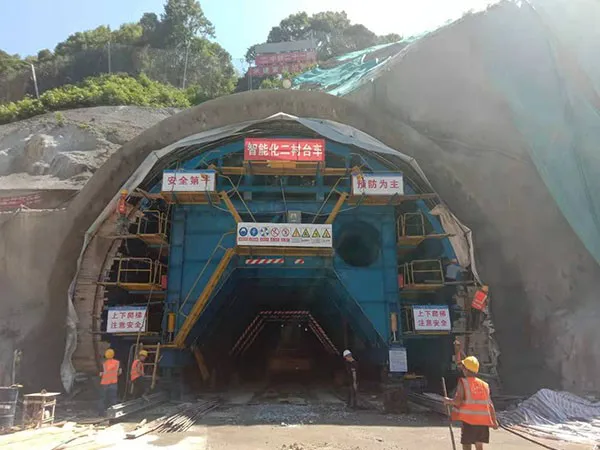
For engineering contractors, project managers, and equipment procurement personnel, a deep understanding of the design details and industry trends of secondary lining trolleys helps in making more valuable decisions during equipment selection and construction management.
1. Understanding the Role of Secondary Lining Trolleys in Tunneling Projects
The main function of secondary lining trolleys is to support and fix the formwork system, forming a closed space for pouring concrete, and enabling the turnover of pouring cycles through hydraulic or mechanical structures. Compared to traditional manual formwork erection methods, modern mechanized trolleys have the following advantages:
High forming accuracy: Strong formwork stability, with errors controllable to the millimeter level;
Strong controllability of construction period: High mechanized turnover efficiency, enabling 1-2 cycles per day;
High level of construction safety: Reduces manual work at heights and high-risk operating positions;
Superior appearance quality: High lining flatness, better meeting long-term operational requirements;
Reduced rework and concrete waste.
The importance of secondary lining trolleys is further highlighted in scenarios such as long-distance tunnel construction, curved section construction, and ultra-large cross-section construction.
2. Key Components and Engineering Structure of a Modern Secondary Lining Trolley
A stable and reliable secondary lining trolley consists of multiple functional modules, each of which directly affects the construction quality. 2.1 Main Load-Bearing Structure (Chassis & Frame)
The load-bearing structure is the core of the trolley, typically constructed using high-strength steel such as Q345 and Q460 to withstand the weight of the formwork and the lateral pressure from the concrete during pouring.
Structural Design Considerations:
A combination of box girders and H-beams enhances bending resistance;
Heavy-duty reinforcing ribs are placed at load concentration points to prevent fatigue cracking;
A fully welded structure is employed to improve overall rigidity;
Heat treatment is applied to the formwork support areas to strengthen them and prevent deformation caused by long-term use.
2.2 Rail System (Wheel & Rail System)
In tunnels, space is limited and gradients change frequently; therefore, the rail system must ensure stability and reliability.
Technical highlights include:
High-wear-resistant alloy steel solid wheels with strong impact resistance;
Conical guide wheels prevent derailment, especially suitable for construction on curved sections;
Adjustable wheel gauge mechanism adapts to tunnels with different cross-sections;
Low-noise bearings and lubrication system improve comfort and reduce maintenance.
At some modern construction sites, the manufacturer provides rubber-coated wheels or dual-mode wheels (rail wheels + rubber wheels) suitable for different ground conditions.
2.3 Formwork, Lifting & Positioning System
The formwork is a key component for forming quality; its structural design determines the flatness and dimensional accuracy of the lining.
A hydraulic lifting system enables the raising and lowering of the entire formwork unit;
A multi-point synchronous system ensures uniform stress on the formwork;
The formwork is composed of high-strength steel plates and a high-precision curved frame;
The outer surface is laser-cut to ensure the curvature perfectly matches the design drawings;
Sealing strips are installed at the formwork joints to prevent grout leakage.
For demanding municipal and railway projects, the formwork surface may even undergo polishing to ensure a fair-faced concrete finish.
2.4 Power Source
Depending on the construction environment, power systems can be categorized as follows:
Electric drive (suitable for tunnels with poor ventilation and high environmental requirements)
Diesel drive (suitable for short tunnels or well-ventilated environments)
Electro-hydraulic hybrid drive (higher control precision and smoother power)
As the industry transitions to green construction, electric trolleys are gradually becoming the trend.
…
For more detailed information on the design specifications for secondary lining trolleys, please click to visit: https://www.gf-bridge-tunnel.com/a/blog/secondary-lining-trolley-design-specifications.html


